A cat net accessory kit needs a defined contents list. “No-drill kit” does not identify the hooks, adhesive, rope or instructions, and a photograph does not tell a distributor how many of each item should arrive.
Start with the net and the proposed fixing arrangement, then give the complete pack a reference. A useful kit record lets a buyer compare a sample with a quotation, lets a packer distinguish similar versions and gives the receiving team a clear way to report a missing part.
Separate net-only supply from the two kit requests
Identify whether the request is for netting alone, a drilled-fixing kit or an adhesive no-drill kit. These are different supply descriptions. A net-only panel or roll should not be assumed to include the accessories shown beside it in a catalogue.
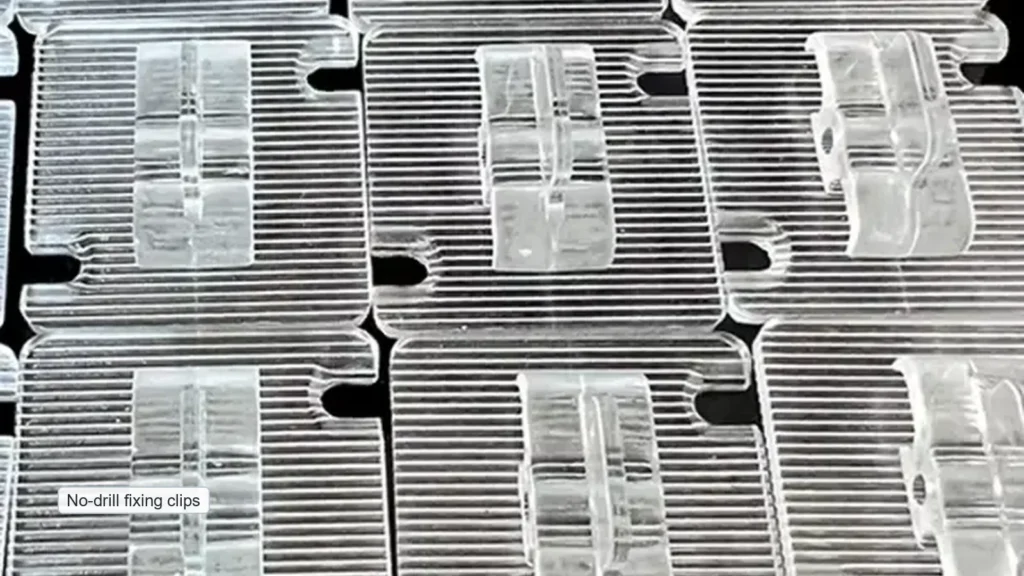
MaxCatNet’s documented drilled-fixing example includes rope, metal hooks, expansion plugs, cable ties and paper instructions. The adhesive no-drill example shows clear plastic hooks and adhesive. Those examples are a starting point for a contents discussion, not a confirmed bill of materials for every size or order.
Name the net separately: transparent nylon monofilament netting or HDPE mesh with wire reinforcement. Add its proposed specification and finished size. A kit approved around one net and opening does not automatically define another.
If the fixing method is still undecided, use the no-drill versus drilled installation guide first. For a rented property, keep the rental and permission questions with the site brief. The contents list records the selected proposal; it does not decide whether that proposal suits the building.
Give each component an identity and a quantity unit
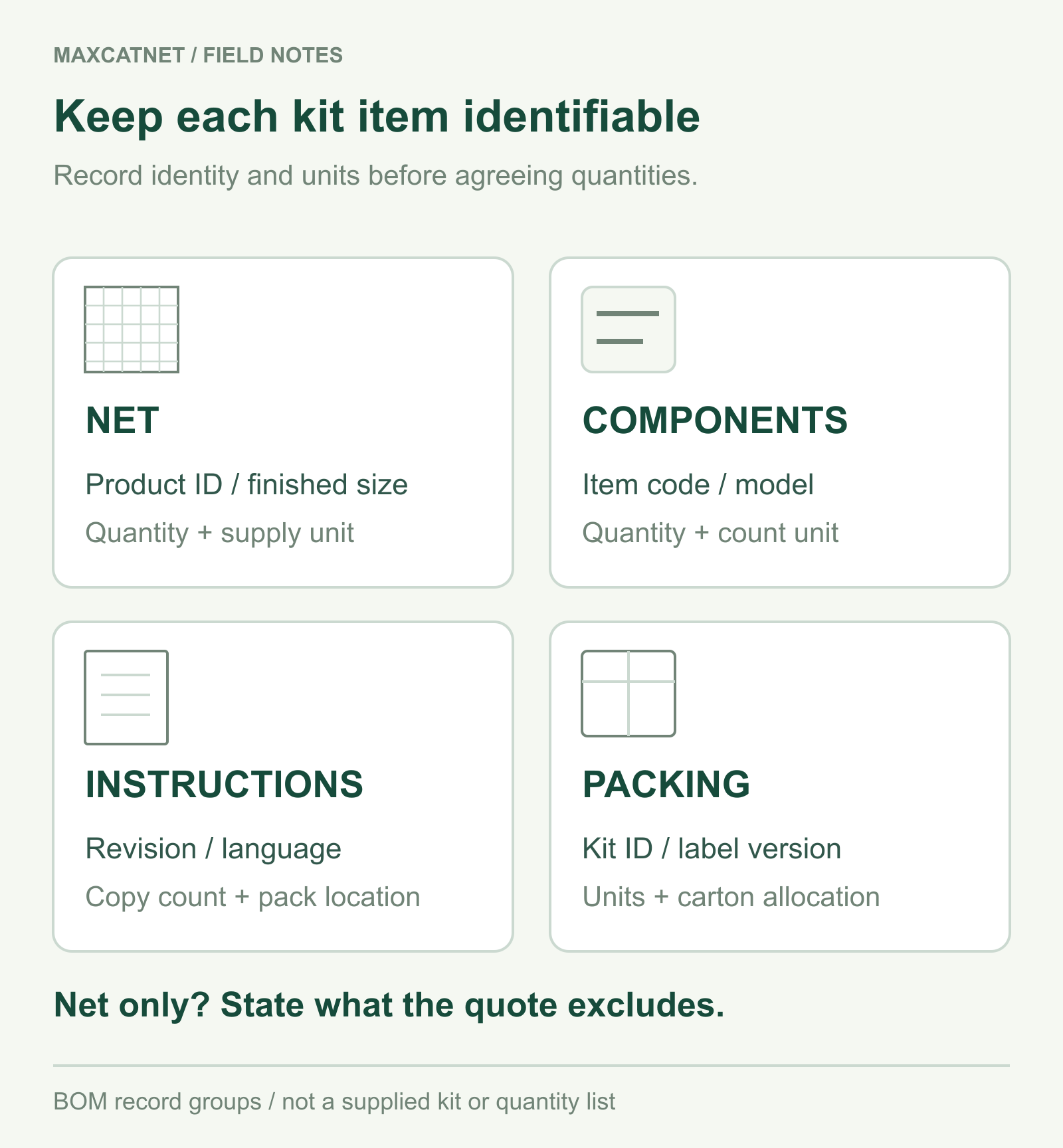
Use a bill of materials, or BOM, with one line for each distinct component. “Hooks and glue included” is too vague for a packing check. Record the supplier part reference or an agreed drawing and photograph, the quantity per kit and the unit being counted.
| Record line | Identity to record | Quantity and unit to confirm |
|---|---|---|
| Net panel or roll | Net reference, specification, finished dimensions and edge treatment. | Number of panels or rolls; dimensions remain separate from the count. |
| Each hook, plug, clip or tie | Individual part reference and distinguishing size or feature, where included. | Pieces per kit for each part; list any agreed spares separately. |
| Rope | Rope reference and whether supplied as cut lengths or a coil. | Pre-cut supply: number of lengths and length of each, with the unit. Coil supply: coil count and supplied length per coil; record any total separately. |
| Adhesive | Exact product code and labelled container size. | Number of containers and nominal fill per container, using the label’s unit. |
| Instructions | Document title, revision, language and applicable kit reference. | Printed copies or the agreed way to provide the digital document. |
| Pack and label | Kit SKU, packaging version and label or artwork reference. | Kits per inner pack and carton, as specified for the order. |
Keep the quantity per kit separate from the quantity per carton. An adhesive container count is also different from its nominal fill: record both rather than treating “one adhesive” as a complete specification. Do not convert a labelled weight into a volume without the information needed for that conversion.
Link the adhesive kit to its actual instructions
For an adhesive no-drill request, ask for the exact hook and adhesive combination being proposed. Keep the adhesive label and instructions with that kit reference. A generic description such as “clear glue” cannot identify the product or resolve whether two offers contain the same material.
Before approving the proposal, ask for the applicable surface conditions, preparation requirements, adhesive quantity, curing conditions, fixing arrangement and use limitations. These must come from the identified system’s instructions and the site assessment. This guide does not supply a universal curing time, fixing distance or suitable-surface list.
If those details remain unresolved, keep the sample status clear. Receipt of a bag of parts is not approval of an installation. An adhesive kit still needs a suitable opening, fixing surfaces and instructions; the words “no drill” do not establish that it can be used without risk.
Approve a reference pack that can be checked
Ask for a sample pack linked to the proposed BOM revision. Photograph the complete contents laid out, the component labels, the instruction reference and the closed pack label. Where a small component is difficult to distinguish, add an identified close-up rather than relying on its position in a group photograph.
Mark any difference between the sample and the proposed order, such as a temporary label or instructions in a different language. Record which version is accepted and which items still need confirmation. The packaging artwork guide covers label and artwork checks.
Check missing parts and mixed versions on receipt
Agree the packing and receiving check before shipment, including which packs will be opened and what records are needed. Check the kit SKU and BOM revision, then compare each component with its line in the record. Count the parts, check rope quantities in the stated unit and verify the adhesive product and container size.
For an order containing several kit versions, identify the quantity of each version by carton. Similar bags may contain different net sizes, accessories or instruction languages. Keep each SKU and its reference pack distinct rather than treating the total carton count as proof that the mix is correct.
If a part is missing, damaged or different, record the affected kit and carton reference, the expected item and quantity, the observed contents and photographs. Keep the affected packs identifiable while the supplier reviews the discrepancy. Confirm the replacement part’s identity before accepting a similar-looking substitute.
Carry the kit reference into reorders
Request a repeat order against the net reference, BOM revision, instruction version and packaging reference. If the supplier proposes a different hook, adhesive, rope or label, record the change explicitly and decide what needs another sample or review. A familiar kit name should not hide a changed component.
Keep MOQ, sample charges and timing in the current quotation. The trial-order planning guide explains those order conditions; the kit record defines what that quotation is supplying.
Common accessory-kit questions
Does every no-drill cat net kit contain adhesive?
Do not infer the contents from that name. Ask for the proposed fixing arrangement and the itemised contents. This article’s adhesive kit is one request type, not a definition of every no-drill method.
Should spare parts be counted with the installation parts?
List any agreed spares separately, while also recording the total quantity packed. That lets the receiver distinguish an omitted required part from a spare allowance.
Can a kit photograph replace the contents list?
Use the photograph alongside the list. The written record identifies quantities, units, component models and document versions that may not be readable in a photograph.
Send a kit-specific enquiry
Send MaxCatNet your net and accessory-kit brief with the net specification, proposed fixing arrangement, opening photographs, kit quantity, required packaging and destination. Include your component list or sample reference. Ask the reply to identify the proposed parts, quantity units, instructions and any contents still awaiting confirmation.