
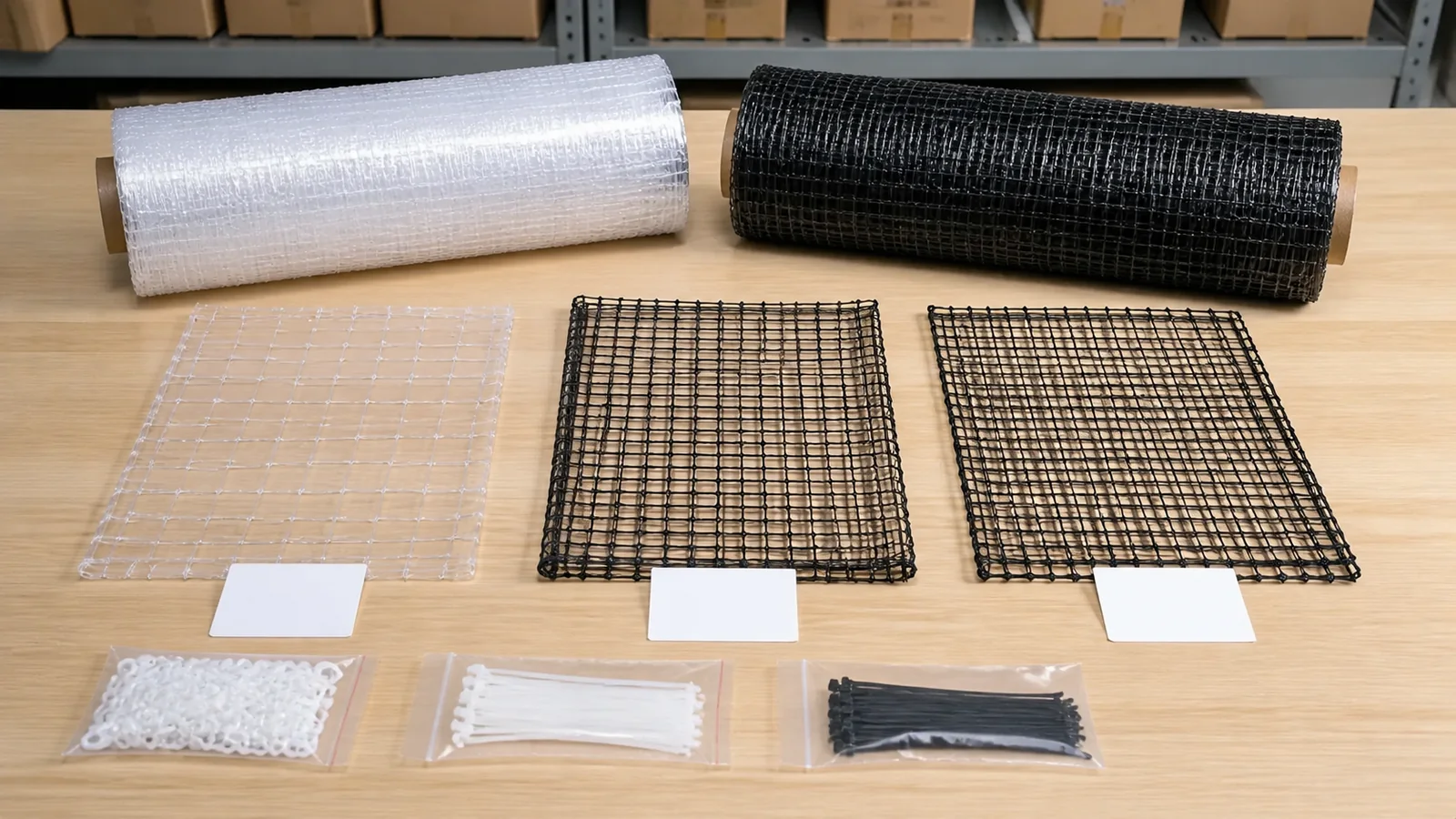
Roll stock and pre-cut panels are not simply two package sizes. They move measurement risk, cutting work, waste, labeling, and change management to different parts of the project. Rolls give a trained installer flexibility when many openings are similar or final trimming belongs on site. Pre-cut panels can simplify sorting and reduce field cutting when dimensions, edge preparation, and opening IDs are already controlled. A hybrid order may be the most practical choice when a project contains both repeatable and uncertain openings.
Choose the Point Where Final Size Is Decided
With roll stock, the supplier provides an agreed width, length, material, mesh, color, and packing unit. The installer decides individual panel cuts on site or in a local workshop. With pre-cut panels, the buyer and supplier approve the panel schedule before production, moving more dimensional responsibility upstream.
Neither approach removes the need for a survey. The difference is when measured data becomes a cutting decision and who controls the allowance method. Use the measurement guide to define clear endpoints, returns, obstacles, and opening paths. Final fixing-line geometry remains an installer responsibility.
When Roll Stock Is Practical
Rolls can suit distributors keeping standard material in inventory, installers equipped to cut and finish panels, and projects with repeated rectangular openings that are verified at site. A roll can also absorb late dimension changes because the final cut is delayed.
That flexibility requires workspace, tools, trained handling, a cutting plan, identification after cutting, and control of remnants. Wide or long rolls may be awkward in occupied buildings or small balconies. Field cutting can create avoidable waste when opening sizes are not nested in advance. The quotation needs to state usable roll dimensions, edge condition, winding, core, outer protection, label, and whether accessories are separate.
When Pre-Cut Panels Are Practical
Pre-cut panels can suit projects with confirmed dimensions, many unique openings, restricted cutting space, or teams that want each panel packed and labeled for a specific location. Supplier-side cutting can coordinate panel dimensions, edge preparation, and identification.
The tradeoff is sensitivity to survey errors and site changes. A panel cut for one opening may not suit another even when they look similar. The allowance between measured opening and finished panel also depends on the planned perimeter and installation method. Approve the schedule, revision, and responsibility for final fit before cutting begins. The cut-panel identification article explains how opening IDs can travel from survey to installation.
| Decision Factor | Roll Stock | Pre-Cut Panels |
|---|---|---|
| Final cutting point | Installer or local workshop | Supplier before shipment |
| Response to late site change | More flexible within available roll | May require recut or replacement |
| Site cutting work | Higher | Lower |
| Panel identification | Created after cutting | Can be supplied by opening ID |
| Waste control | Depends on local nesting and remnants | Depends on approved cutting plan |
| Survey error exposure | Appears during field cutting | Appears after panel arrives |
Calculate Material Without Hiding Waste
For rolls, map every opening rectangle against the chosen roll width and include edge preparation, test cuts, irregular geometry, and unusable remnants. Record which remnants are large enough for identified future openings. Quoting only total square area is misleading; two projects with the same area can use very different roll lengths because their panel widths may not nest alike.
For pre-cut panels, list finished or cut size clearly and state the supplier's allowance basis. Separate panel material, edge treatment, labels, individual bags, accessory kits, and spare panels. A transparent comparison shows where labor and risk sit rather than assuming the lower material figure is the lower project cost.
Coordinate Material, Edge, and Accessories
The order format applies to both transparent nylon and wire-reinforced net variants, but handling and edge details may differ. Confirm product identity, mesh, strand or wire construction, color, panel or roll dimensions, perimeter treatment, joining method where applicable, and installer-approved accessories. The material comparison helps frame material choice around visibility, cat behavior, installation, and maintenance without absolute claims.
Accessories need their own itemized schedule. A panel does not automatically include cable, anchors, hooks, ties, tension components, or tools. The distributor packing guide shows how separate kit IDs and quantities support receiving and resale.
Consider a Hybrid Project Format
A project may use pre-cut panels for surveyed repetitive units, roll stock for irregular openings confirmed only during installation, and a small controlled spare quantity for damage or approved changes. The hybrid schedule needs distinct item codes and packing zones so material is not mixed.
Assign the openings before ordering. For example, building elevations with repeated geometry can share one controlled panel group, while top-floor balconies with beams, drains, or open upper boundaries remain site-cut. State who authorizes using roll stock as a replacement for a missing pre-cut panel.
Inspect the Order at Receiving
For rolls, verify item code, material, color, mesh, labeled roll dimensions, winding condition, crushing, contamination, and outer protection. For panels, verify opening ID, revision, quantity, labeled dimensions, edge condition, bag integrity, and accessory linkage. Keep damaged or unidentified items segregated.
Test the first package against the approved schedule before distributing everything to installation teams. A packing list that mirrors the opening or roll plan reduces searches and helps the buyer preserve shortages or damage evidence.
Buyer Checklist
- Confirm who owns final cutting and fit approval.
- Classify openings as repeatable, irregular, final, or still changing.
- Calculate roll nesting and remnants rather than relying on total area.
- Approve panel dimensions, allowance method, edge details, and revision.
- Itemize net material and accessory kits separately.
- Give every roll, panel, and hybrid group a distinct code.
- Check package identity and condition before site distribution.
Frequently Asked Questions
Are pre-cut panels always lower waste?
They can reduce field waste when the survey and cutting plan are accurate. Changes, incorrect dimensions, or unsuitable allowances can turn a complete panel into unusable material.
Can one roll serve different opening sizes?
Yes, within its usable width and length, provided the installer has an approved cutting plan and enough material for edge preparation and irregular geometry.
Should spare material be a roll or a panel?
That depends on the likely change. A known critical opening may justify an identified spare panel; varied future repairs may favor controlled roll stock. Define storage and identity either way.
Related Product or Reading
Once pre-cut panels are selected, use the cut-panel identification guide to connect each package with its surveyed opening.
Discuss the Exact Project
Use the MaxCatNet contact page to share the opening schedule, survey status, material and mesh, roll preference, panel dimensions, edge preparation, accessory scope, installer capability, labels, packing groups, and spare strategy.