Knowing how to measure cat netting is one of the most important steps before ordering a balcony or window cat safety net. The product can be made from good mesh, but if the opening is measured poorly or the fixing points are not planned, the installation can still leave gaps, loose edges or an unattractive result.
For B2B buyers, installers and distributors, accurate measurement also reduces sample revisions and customer complaints. A clear order package should show the opening size, the fixing surface, the preferred mesh type and any special conditions such as no-drill installation, railing gaps or an irregular window frame.
MaxCatNet currently focuses on two real product types: Transparent Nylon Cat Protection Net and Stainless Steel Wire-Reinforced Cat Net. This guide explains how to measure for both without making absolute “escape-proof” or “bite-proof” claims.
Start With the Opening, Not the Mesh Roll
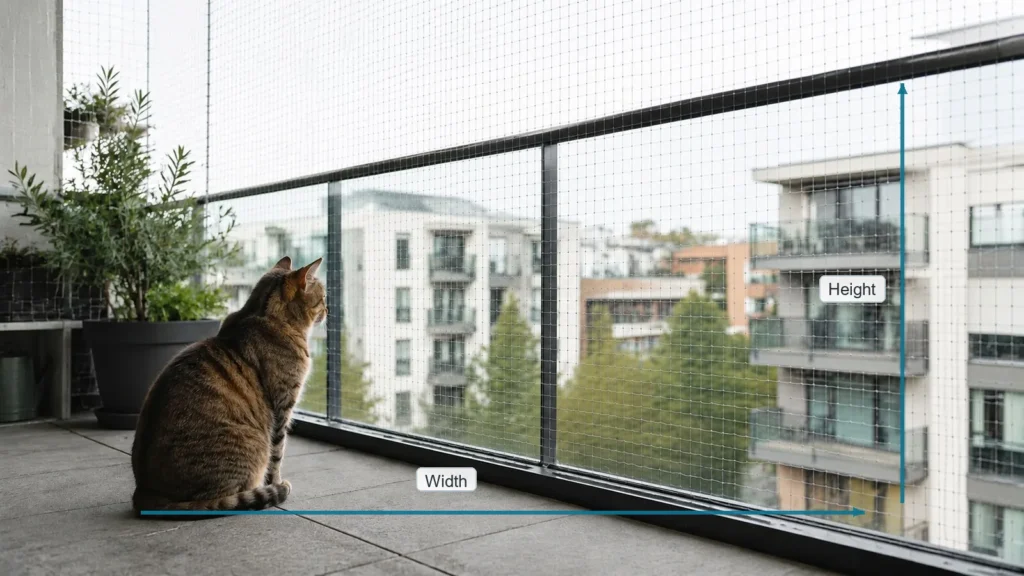
The first measurement should be the actual opening that needs coverage. For a balcony, this is usually the full height and width from the floor or sill area to the ceiling, beam or top frame. For a window, it may be the inner frame opening, outer frame opening or a custom coverage area depending on where the net will be fixed.
Measure the width in at least three places: top, middle and bottom. Measure the height in at least three places: left, center and right. Buildings are often slightly uneven, and one measurement point can miss a narrow gap. If the opening is not perfectly rectangular, record the largest coverage requirement and also note the irregular area.
For a simple rectangular opening, record:
- Clear opening width
- Clear opening height
- Frame or wall material
- Where the fixing line will run
- Whether the net should sit inside the opening or cover the outside face
- Any obstacles such as handles, pipes, lights or railing posts
Do not rely only on a real estate floor plan. Floor plans are useful for room layout, but they do not show small installation details. A photo with dimensions marked on it is usually more helpful for the supplier or installer.
Choose the Mesh Type Based on Visibility and Resistance Needs
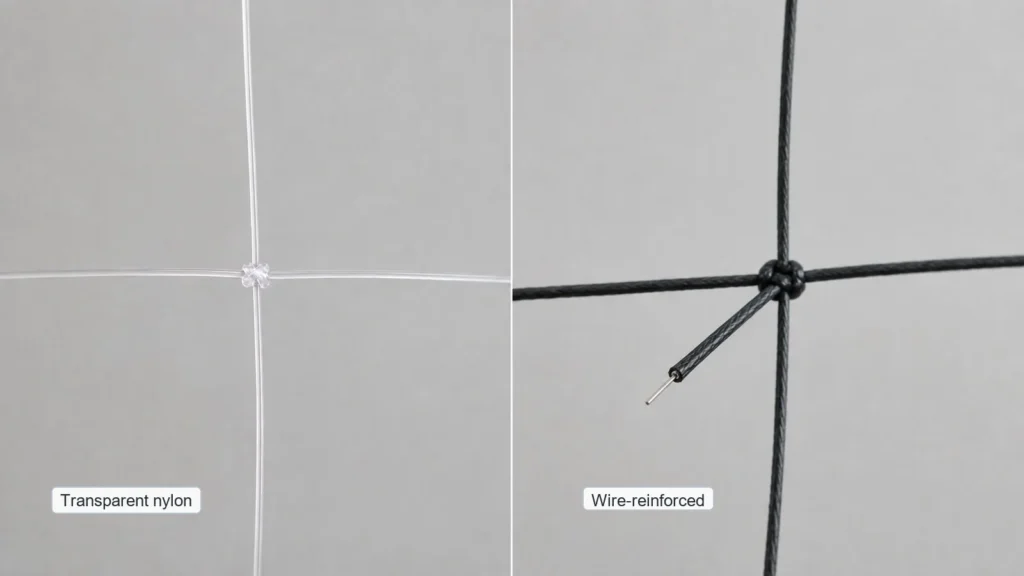
Cat netting is not only about the opening size. The buyer also needs to choose the mesh type that matches the setting. MaxCatNet’s transparent nylon net is designed for a lighter visual appearance, while the wire-reinforced net uses a coated stainless steel wire structure for higher bite resistance.
Transparent nylon cat net is often chosen when appearance and visibility are important. The mesh is lighter and less visible from a distance, which can be attractive for balconies and windows where the owner wants a discreet installation.
Wire-reinforced cat net is often selected for cats that chew more strongly, for larger openings, or for customers who prefer a darker, more substantial mesh appearance. It should still be described carefully as bite-resistant rather than absolutely bite-proof.
When communicating with customers, explain the tradeoff clearly:
| Choice | Main Advantage | What To Check |
|---|---|---|
| Transparent nylon cat net | Lighter visual effect and discreet appearance | Cat behavior, fixing quality and regular inspection |
| Wire-reinforced cat net | Higher bite resistance and stronger visual structure | Preferred color, fixing surface and installation method |
| No-drill or removable fixing | Useful where drilling is restricted | Surface suitability and load direction |
| Permanent fixing | More secure when installed correctly | Building rules, wall material and edge coverage |
The best option depends on the cat, the building and the installation quality. Cat owners should also consider general indoor cat enrichment and supervision. Cats Protection provides helpful background advice on indoor cats and home environment.
Plan Fixing Points Before Confirming Size
A cat net needs a continuous fixing plan. The mesh should not simply hang from a few clips with large loose edges. Before ordering, identify where the net will be attached on every side: top, bottom, left and right.
For balconies, possible fixing points include ceiling beams, side walls, railings, floor edges or existing frames. For windows, fixing may use the inner reveal, outer frame, wall surface or a tension system depending on the building.
Important fixing questions include:
- Is drilling allowed by the landlord or building management?
- Is the fixing surface concrete, tile, aluminum, wood or another material?
- Are there gaps between railing bars that also need coverage?
- Can the net be tensioned evenly on all sides?
- Are there corners where the mesh might pull away?
- Will doors or windows still open normally after installation?
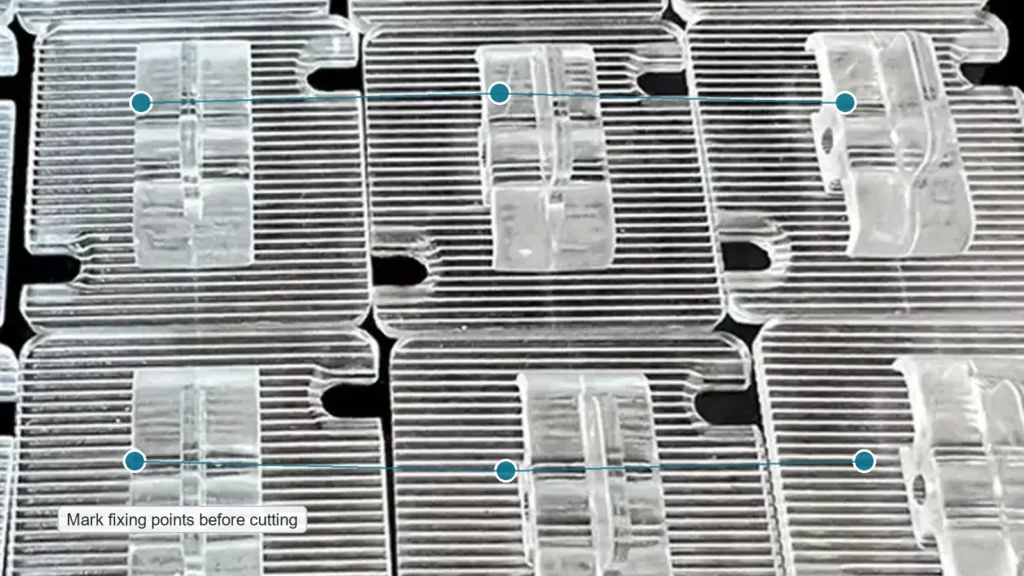
If drilling is not allowed, the buyer should be honest about that from the beginning. A no-drill solution may be possible in some settings, but the supplier needs photos of the surface and opening shape before recommending an approach. Do not present no-drill fixing as universally suitable for every balcony.
Add Allowance Without Creating Loose Mesh
Cat netting usually needs enough material to reach the fixing line and allow secure attachment. However, adding too much extra material can create sagging, folds or gaps. The right allowance depends on the fixing method and installation plan.
For B2B orders, avoid vague phrases like “make it bigger.” Instead, state the measured opening size and the requested finished net size, or ask the supplier to recommend the finished size based on the fixing method. If the net will be trimmed on site, say so clearly.
A practical way to communicate is:
- Opening size: measured width and height
- Required coverage: inside frame, outside frame or full balcony face
- Fixing method: hooks, cable ties, rope, frame, no-drill system or other method
- Edge treatment: whether the edge needs rope, reinforced border or simple mesh
- Quantity: one opening or multiple openings with separate dimensions
This helps avoid a common mistake: one oversized net used for several different windows. Separate openings should be measured and labeled separately, even if they look similar.
Photograph the Opening Correctly
Photos are extremely useful when the dimensions are marked clearly. Take one full photo from straight in front of the opening, then take close-up photos of corners, railings and fixing surfaces. If the balcony has a side return or irregular edge, photograph that part separately.
When possible, include a tape measure in the photo. The photo should show the whole opening, not only the view outside. Avoid dark night photos or heavy filters, because the supplier needs to see the real frame, wall and railing.
For installers and resellers, a simple measurement sheet can reduce back-and-forth:
| Photo | Purpose |
|---|---|
| Full opening front view | Confirms overall shape and coverage area |
| Top fixing line | Shows ceiling, beam or upper frame |
| Bottom fixing line | Shows floor edge, railing base or sill |
| Left and right edges | Shows wall, frame and corner gaps |
| Obstacle close-ups | Shows handles, pipes, lights or doors |
Order Details to Send the Supplier
After measuring, prepare one clean message for the supplier. The goal is to make the order easy to review and quote.
Include:
- Site type: balcony, window, terrace or garden enclosure
- Mesh type: transparent nylon or wire-reinforced
- Opening dimensions and required finished size
- Number of openings
- Fixing method and whether drilling is allowed
- Photos with marked dimensions
- Cat behavior note, especially chewing or climbing habits
- Preferred color if applicable
- Packing, label or resale requirements for distributors
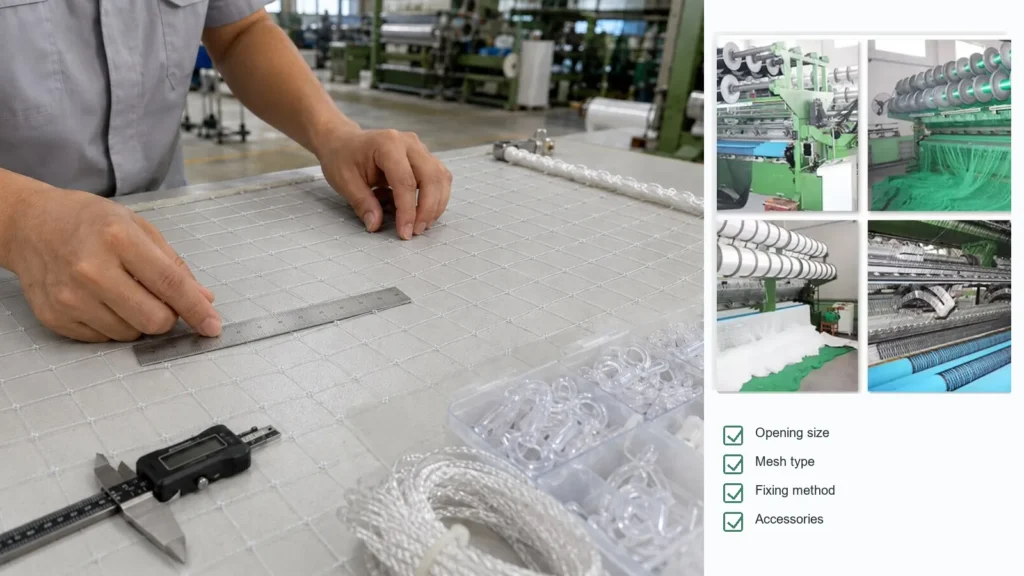
For larger distributor orders, separate the product specification from the installation note. The product specification should describe mesh type, size, color and packing. The installation note should explain how the customer will fix it on site. Mixing these together can create confusion during production.
Common Measurement Mistakes
The first mistake is measuring only one side of an opening. Balconies and windows can be uneven. Always measure multiple points.
The second mistake is ignoring small escape gaps around railings, corners or window handles. A net that covers the main rectangle but leaves a side gap is not a good installation.
The third mistake is choosing transparent nylon only for appearance when the cat has a strong chewing habit. In that case, a wire-reinforced option may be more suitable, although installation and supervision still matter.
The fourth mistake is assuming no-drill installation will work on every surface. Surface material, load direction and fixing geometry all affect the result.
The fifth mistake is sending only text dimensions without photos. Photos help the supplier notice details the buyer may not describe.
Final Check Before Installation
Before installing the net, compare the delivered product with the order:
- Mesh type and color
- Finished size or roll size
- Accessories and fixing materials
- Edge treatment
- Packaging and labels
- Any special instruction from the installer
After installation, inspect the perimeter carefully. The mesh should be tensioned enough to avoid large loose areas. Fixings should be close enough to prevent gaps. Check corners, bottom edges and places where the cat may push or chew.
Conclusion
A good cat net order begins with accurate measurement, clear photos and a realistic fixing plan. Measure the opening at several points, decide whether transparent nylon or wire-reinforced mesh is more suitable, and send the supplier enough information to understand the building condition.
If you are preparing a balcony or window cat net order, MaxCatNet can help review mesh type, dimensions and packing details. Send your opening photos, measurements and fixing requirements through the contact page before confirming production.
FAQ
How do I measure a balcony for cat netting?
Measure the full width and height of the coverage area at several points. Mark the fixing line on photos so the supplier can see where the net will attach.
Should I choose transparent nylon or wire-reinforced cat net?
Transparent nylon is more discreet, while wire-reinforced mesh offers higher bite resistance. The right choice depends on cat behavior, visual preference and installation conditions.
Can I use cat netting without drilling?
Sometimes, but not always. No-drill fixing depends on the surface, opening shape and load direction. Send photos before assuming it will work.
Do I need to add extra size to the measured opening?
Usually the net needs enough allowance for fixing, but too much extra material can create loose mesh. Give the measured opening and fixing method to the supplier so the finished size can be confirmed.
Is cat netting completely escape-proof?
No product should be described as absolutely escape-proof. Proper mesh choice, secure fixing, regular inspection and supervision all contribute to safer use.