
A recessed window has more than width and height. The reveal creates depth, the sash moves through space, the handle projects, and existing screens or blinds may occupy a second plane. A cat net can fit the rectangular opening while still blocking normal window operation. Measure the geometry and the movement before choosing the fixing line.
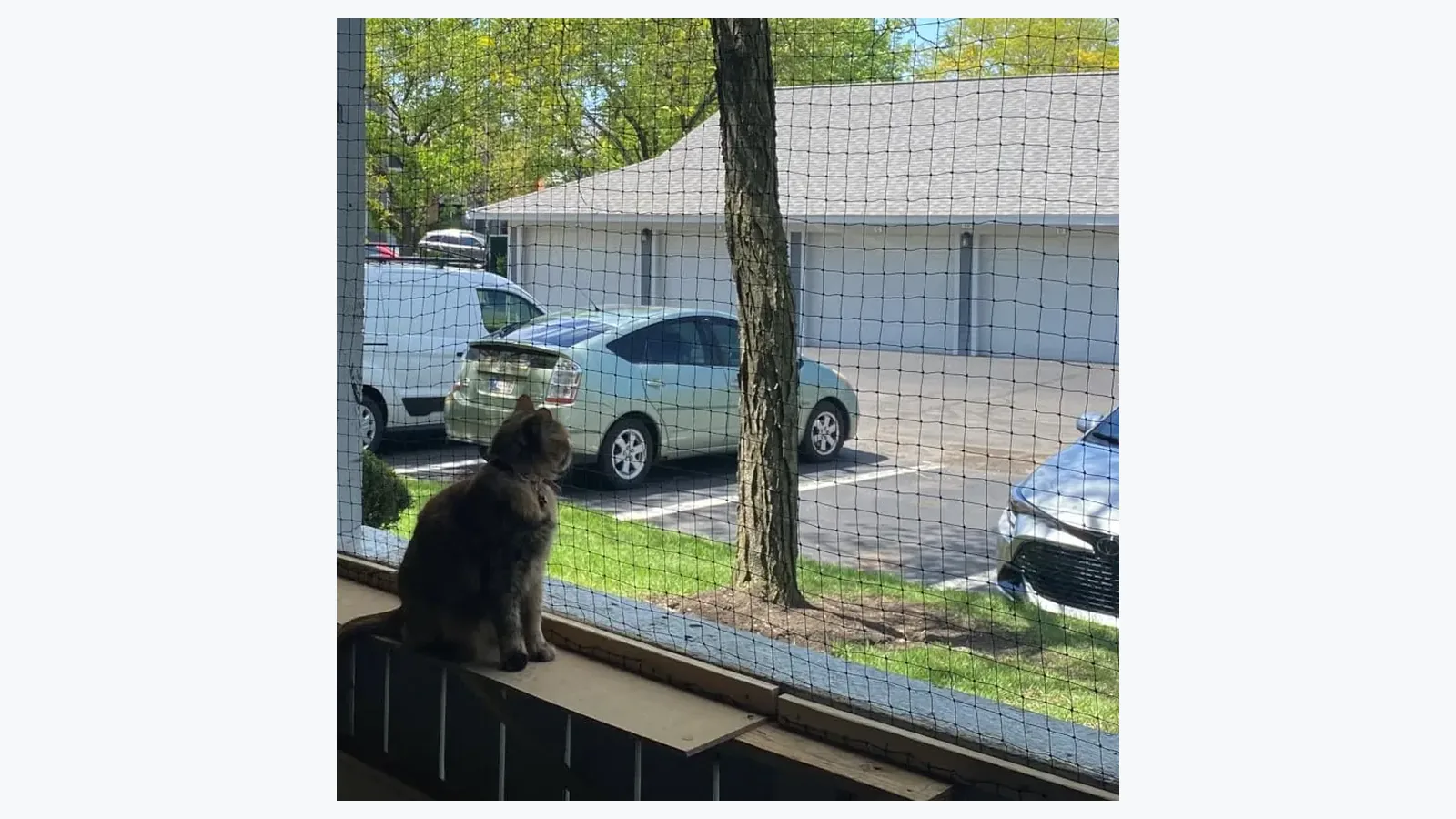
Identify the Window Type and Every Moving Part
Record whether the sash slides, swings inward, swings outward, tilts, pivots, or combines movements. Photograph it closed, partly open, and fully open. Include handles, locks, restrictors, hinges, insect screens, blinds, and removable panels.
Trace the path of the furthest projecting point. On an inward-opening sash, the handle may reach farther into the room than the frame edge. On a sliding window, the moving panel may overlap a fixed panel and change access for cleaning. A tilt-and-turn mechanism can use more than one path.
Where the window provides required ventilation or emergency access, preserve its intended function and comply with local building rules. Those requirements need review before any net or fixing detail is accepted.
Measure Width, Height, and Reveal Depth
Take width and height at several positions because a reveal may be out of square. Add depth measurements from the inner wall face to the frame, sash, outer edge, and any candidate fixing plane.
Use a simple side-view sketch. Mark the wall, trim, frame, sash, handle, screen, sill, and proposed net line. This sketch often reveals a collision that is hard to see in a front photograph.
The general cat net measurement guide covers the base dimensions. A recessed window adds the third dimension and the opening path.
Choose the Fixing Plane
Possible planes may sit inside the reveal, on the room-side face, near the window frame, or toward the exterior. Each choice changes movement, visibility, cleaning, and substrate.
An inner plane may preserve space around the sash but bring the net close to handles, curtains, or furniture. A deeper plane may keep the net farther from the room but conflict with the sash or screen. An exterior plane may involve weather exposure, access at height, facade rules, and a different installation method.
The nearest flat surface is not automatically a suitable fixing base. Identify whether it is concrete, masonry, wood, metal, tile, plaster, sealant, cladding, or decorative trim. The installer needs the real substrate, not only its painted appearance.
Check Handle, Hinge, and Lock Clearance
Open and close the window slowly while holding a temporary straight reference at the proposed net plane. Measure the closest approach of the handle, sash corner, hinge, lock, and restrictor.
Allow for normal hand access. A handle that technically clears the mesh but cannot be gripped comfortably creates a poor daily result. Likewise, a lock or child restrictor that becomes unreachable may change how the window is used.
Avoid using the net as a stop for the sash. Repeated rubbing or impact can damage mesh, edge lines, or fixing points.
| Element | Record | Compatibility Check |
|---|---|---|
| Sash | Type and full path | Clears the proposed net plane? |
| Handle | Projection and grip space | Operates without pressing the mesh? |
| Hinge or pivot | Position and movement | Leaves the edge detail intact? |
| Insect screen | Fixed or removable plane | Can both systems coexist and be serviced? |
| Sill and drain | Depth and water path | Remains cleanable and unobstructed? |
| Blind or curtain | Track and movement | Avoids rubbing or trapping the net? |
Coordinate With Insect Screens and Blinds
An insect screen and a cat net serve different purposes. A thin insect screen should not be treated as a substitute for the cat net product, and the two layers need separate frames or compatible planes.
Record how the insect screen is removed. If the cat net blocks its clips or sliding path, routine cleaning becomes difficult. Blinds and curtains can also press against the mesh or hide early damage, so leave a visible inspection route.
Where several layers occupy the reveal, a section drawing is more reliable than a verbal note such as "inside the window."
Preserve Cleaning and Maintenance Access
Glass, sill, drainage channels, tracks, and screens still need cleaning. Decide whether the net is fixed permanently, uses a planned removable section, or leaves access from another side. A removable element needs a defined closure and a post-cleaning check.
Include the window in the household inspection routine. Look for abrasion where moving parts approach the mesh, loose edges, displaced clips, strand damage, coating damage on wire-reinforced material, and changed tension.
After window repair or replacement, repeat the survey. A new handle, thicker frame, different sash, or added screen can make the original clearance record obsolete.
Verify Operation at Handover
At completion, operate every sash, handle, lock, restrictor, blind, and screen through its intended range. Check the full perimeter with the window open and closed. Photograph the installed net at the same three-dimensional angles used in the survey.
If movement rubs, catches, or opens a gap, stop using that configuration until the installer reviews it. Avoid forcing the window against the mesh or creating an improvised cutout around a handle.
Related Reading
- How to Measure Cat Netting supplies the general opening measurements.
- No-Drill vs Drilled Installation compares attachment methods after the fixing plane and substrate are known.
Common Questions
Can the window still open after a cat net is installed?
It can when the fixing plane and all moving paths are coordinated. Verify the exact sash and handle movement during survey and handover.
Can an insect screen and cat net use the same frame?
That depends on the actual frame and system. Treat them as separate functional layers and confirm removal, cleaning, and fixing with the installer.
Is decorative trim a suitable fixing surface?
Its appearance does not establish structural suitability. Identify the material and what lies behind it before selecting drilled or no-drill attachment.
Request a Window Fit Review
Send closed, partly open, and fully open photos, reveal measurements, substrate close-ups, and any screen or blind details through the MaxCatNet contact page. That evidence supports a practical material and fixing discussion.