An installer can waste a surprising amount of netting by assigning stock sizes before the opening schedule is complete. The better sequence is simple: survey each boundary, add the agreed fixing allowance, give every finished panel a job code, and only then allocate the available 4 × 3, 6 × 3, 8 × 3 or 10 × 4 m transparent-net size.
The transparent nylon cat-net product page identifies those four standard sizes. It also documents transparent UV-stabilized virgin nylon monofilament, a stated 0.40 mm line and 30 × 30 mm mesh. These facts define the product being allocated; a site-specific boundary and fixing review is still required.
Build an Opening Schedule Before Opening a Pack
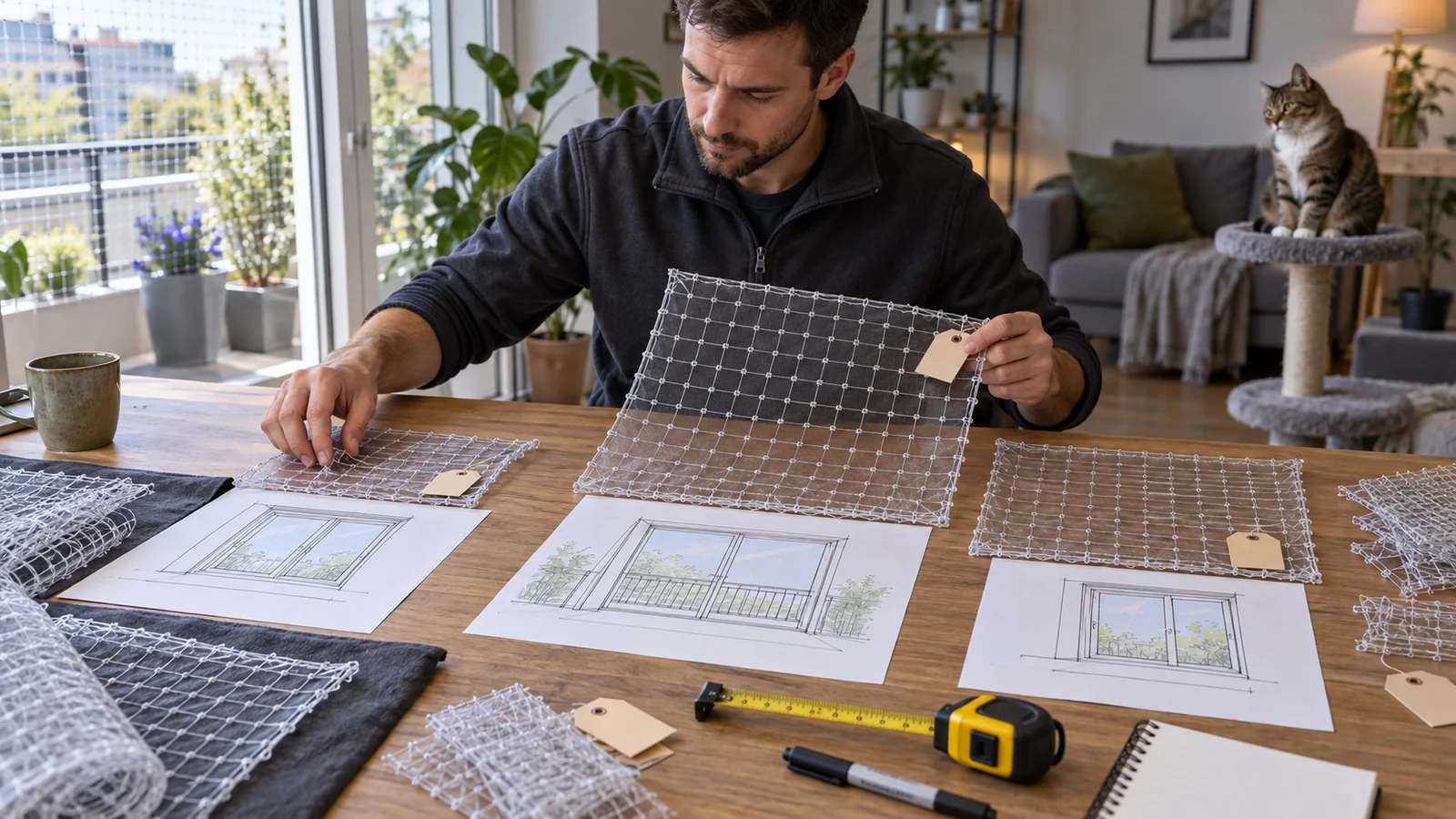
Give each balcony, window or terrace boundary a unique code. Record finished width and height at several points, corner changes, obstructions, access panels and the selected fixing line. Add only the allowance required by the approved fixing method. Keep the measured opening, cutting size and finished installed size in separate columns so they cannot be confused.
For a multi-unit project, release the latest survey revision to the cutting team. A panel cut from an obsolete measurement may still look usable on the bench, yet fail at a stepped edge or access point on site.
Allocate Standard Sizes by Usable Geometry
Match each panel rectangle to the smallest stock size that covers the required cutting dimensions with a workable edge allowance. Rotation may improve yield when the mesh orientation and finishing method allow it. Mark orientation on the cutting sheet instead of relying on memory.

Treat 4 × 3, 6 × 3, 8 × 3 and 10 × 4 m as nominal catalogue choices that must be confirmed on the order and pack label. A longer pack is not automatically the economical choice. One clean panel from a smaller size can be safer operationally than several pieces cut from a large pack when the remaining offcuts have no assigned use.
The earlier cat-net roll remnant control method explains how to keep leftover material tied to its identity and job. Apply the same principle here: an offcut stays usable only when its dimensions, product identity and condition remain known.
Cut, Label and Reconcile Each Panel
Use a clean surface that makes the transparent mesh visible. Confirm the job code, panel code, cutting dimensions and orientation before the first cut. After cutting, attach a removable label that will not damage or permanently mark the mesh. Keep hardware for that opening in a separate bag when the project includes an accessory kit.

Record the actual offcut dimensions immediately. A vague note such as “small remainder” is not enough for future allocation. Store usable offcuts flat or rolled according to the supplier's handling guidance, away from snagging edges, contamination and unidentified material.
At packing, reconcile three totals: stock packs opened, finished panels released and labelled offcuts retained. Quarantine any piece with uncertain identity, damage or an unverified dimension. This is especially important when transparent nylon and wire-reinforced black netting are handled in the same workshop; they are separate product entities and should not share labels.
Freeze the Job Pack Before Dispatch
The dispatch sheet should list opening code, panel dimensions, fixing allowance, product description, stock size used, accessory scope and installation drawing revision. Add a panel map so the installer can locate every piece without unfolding the entire shipment.
This workflow turns cutting yield into a traceable project decision. It does not promise universal fit: final fixing points, local building requirements, substrate condition and safe access remain site responsibilities.
Related Cat-Net Controls
- Plan a 100-piece cat-net trial order with sample and production timing
- Keep mesh, color, size and kit scope aligned during warehouse picking
- Approve private-label packaging against SKU, mesh, color and contents
Request a Panel-Allocation Review
Send the opening schedule, fixing allowance, panel codes, preferred pack sizes and accessory scope through the cat-net inquiry page. Ask for the transparent-net sizes and pack identity to be confirmed before cutting begins.