
A correctly packed cat net panel can still reach the wrong opening, become tangled, lose its accessory set, or obstruct an occupied corridor after delivery. Site staging is the short period between receiving and installer release, but it needs the same identity discipline as production and packing. The project team should define delivery windows, building and opening IDs, a clean protected staging location, route restrictions, custody, condition checks, exception handling, and the order in which packs are released to installers.
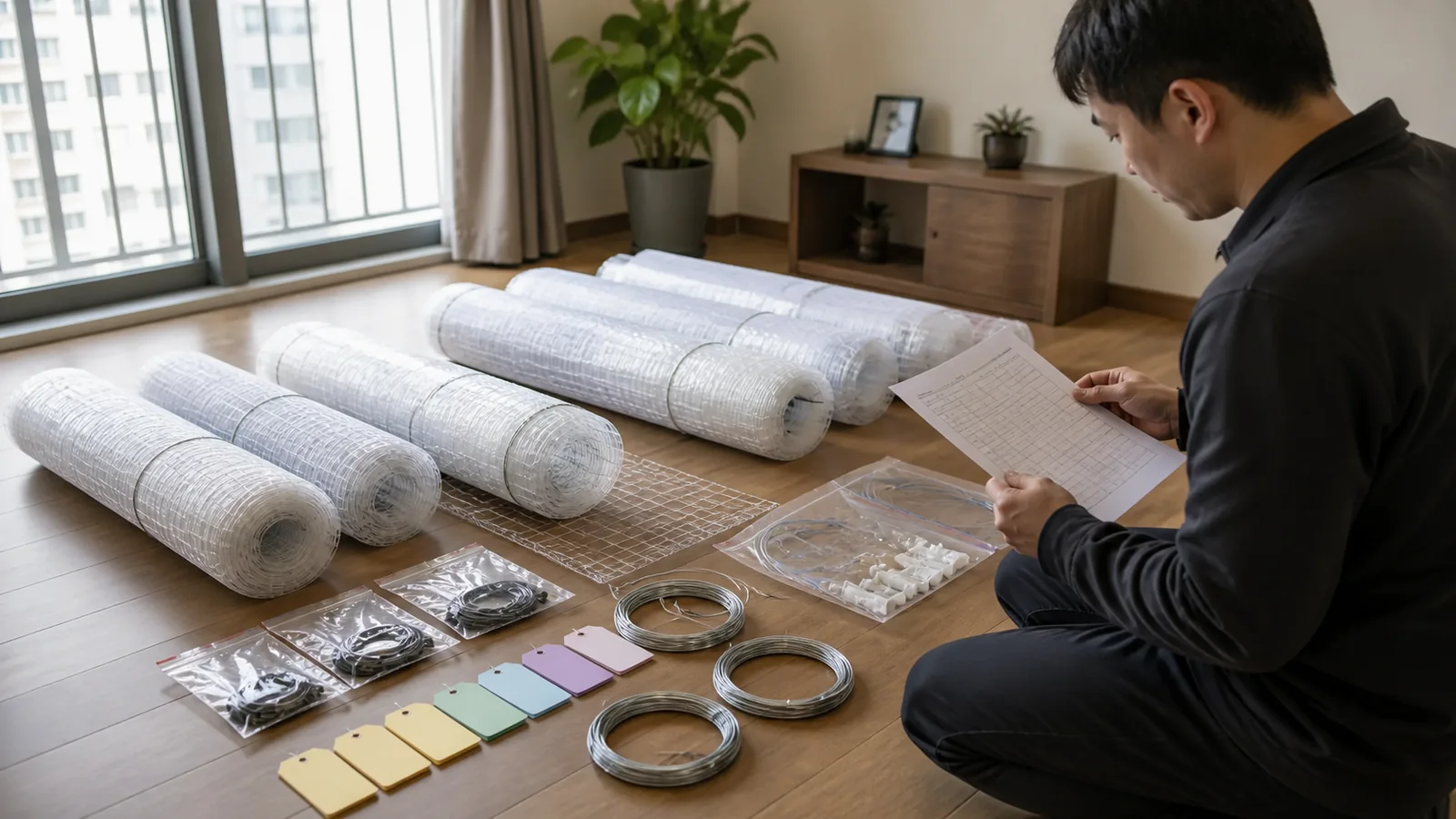
Approve the Staging Plan Before Delivery
Identify building, entrance, lift or stair route, floor, unit access, staging room or zone, allowed delivery time, responsible receiver, fire and emergency routes, resident communication, and maximum practical pack sequence. Obtain building approval for the actual plan.
Never assume a lobby, corridor, balcony or vacant unit can be used. Occupied routes, doors, service rooms and shared areas have their own access and management requirements.
Use a Traceable Pack Hierarchy
Every panel pack should connect project, building, floor, unit, opening and panel IDs. Accessory sets should use the same hierarchy and state whether they are shared or opening-specific. The cut-panel identification guide provides the panel logic.
Labels need to survive transport and normal site handling without being placed on net surfaces in a way that causes damage. Keep a packing list and a digital or printed release register.
Receive Without Spreading Packs Across the Site
Count packs at the designated handoff point and compare IDs with the delivery list. Photograph external condition, labels and any visible wetting, crushing, tearing, tangling or missing accessory container. Record who accepted custody and where each group moved.
If a pack belongs to an unavailable unit, keep it in the approved staging zone. Never leave it outside the apartment door or exchange it with a visually similar pack.
Protect Condition and Access
Use a clean, dry and protected location suitable for the product and project packaging. Keep packs away from sharp edges, uncontrolled heat, moisture, construction debris, chemicals, heavy loads and traffic. Support them in the orientation and stacking method agreed with the supplier.
Preserve exits, fire equipment, doors, lift lobbies, corridors and resident paths. Site safety and access rules control the exact arrangement; the article does not prescribe a universal stack height or storage period.
| Staging Control | Record | Release Blocker Example |
|---|---|---|
| Identity | Building, unit, opening, panel IDs | Label missing or conflicting |
| Quantity | Packs and accessory sets received | Count does not match list |
| Condition | Outer pack and visible product condition | Wet, cut, tangled or crushed pack |
| Location | Approved staging zone and position | Pack left in occupied route |
| Custody | Receiver, time, installer handoff | Ownership or access unresolved |
Separate Exceptions Immediately
Tag and isolate unidentified, damaged, wet, incomplete or wrongly delivered packs without opening or repairing them casually. Preserve original packaging and photographs. Record the affected ID, observed condition, custody and requested decision.
A missing label is not solved by guessing from panel size. Ask the supplier or project controller to reconcile production and packing records. If opening is authorized for identification, record who approved it and what was found.
Release Packs in Installation Sequence
The installer should receive only the panels and accessories for the openings being released. Confirm the current survey revision, site access, panel ID, material, orientation, accessory set and exception status. Record time and installer custody.
When work pauses, return unused packs to an approved controlled position with identity intact. Never mix loose accessories from completed and future openings.
Close Staging at Daily and Project Handover
At the end of each shift, reconcile installed, returned, held, damaged and missing packs. Keep occupied routes clear and update the release register. The final installation handover record should connect each installed opening with its panel and any site exception.
Review recurring staging problems with supplier, logistics and site teams. Adjust label placement, pack grouping, delivery sequence or staging capacity for the next phase rather than relying on informal workarounds.
Plan Daily Capacity Instead of Overfilling the Staging Zone
Calculate staging demand from the released installation sequence, not the total project quantity. For each day, list planned openings, panel and accessory packs, expected installation duration, access appointments, return packs and a small controlled contingency approved by the project. Compare that list with the physical staging area and building restrictions before dispatch.
Delivering too much product creates repeated handling, mixed IDs and occupied-route pressure. Delivering too little encourages installers to borrow packs from future units. Use a daily call-off with a cutoff time, version and responsible approver. When access changes, update the call-off rather than redirecting packs informally at the entrance.
At shift close, measure staging performance through facts: packs received, released, installed, returned, held, missing and damaged; average time in custody; and access exceptions. Use these records to adjust delivery grouping and sequence. Never turn the metrics into unsupported product-life or installation-speed claims. Their purpose is to keep product identity and building access under control.
Transfer Custody at the Staging-Zone Door
The site receiver and installer should record pack IDs, condition, quantities and time whenever custody changes. Packs that remain in staging keep the site owner's location record; released packs move to the installer's opening register. Damaged or unidentified items move to a separate exception owner. This boundary prevents responsibility from disappearing between a signed delivery note and work inside an occupied unit.
Protect Resident and Project Information on Pack Labels
Labels need enough location data for controlled delivery without exposing more resident information than the project requires. Prefer project, building, floor, unit and opening codes defined by the project rather than personal names on shared-corridor packs. Control digital packing lists and delivery photos through authorized access. When a pack is reassigned after a site revision, replace or cancel old location labels so two active identities cannot travel together. The project manager should align traceability with applicable privacy and building rules. At project close, dispose of temporary labels and resident-access lists through the authorized information process while keeping the product traceability record required by the contract.
Buyer Checklist
- Approve delivery route, time, receiver, and staging zone.
- Label every pack by project through opening ID.
- Count and photograph packs at the handoff point.
- Keep packs clean, protected, and outside occupied routes.
- Isolate unidentified, damaged, wet, or incomplete packs.
- Release only current panels and accessories to installers.
- Reconcile custody at every shift and final handover.
Frequently Asked Questions
Can panels be left outside each apartment?
Only if the building and project plan explicitly approve that controlled location; occupied access and identity risks usually require stricter staging.
Can an unlabeled panel be matched by size?
Never guess. Reconcile production, packing and survey records before release.
Should damaged packaging be removed?
Preserve evidence and obtain the responsible decision before opening or repacking.
Related Product or Reading
Use cat net packing for distributors to define the upstream pack structure that the site staging register must preserve.
Discuss the Exact Project
Send MaxCatNet the project hierarchy, panel list, accessory grouping, delivery sequence, staging restrictions, label format, pack condition needs, and installer release plan.