
A garden gate is not another fixed fence bay. Its leaf swings or slides, the latch needs hand clearance, hinges project into the boundary, and occasional maintenance may require a wider opening. A useful cat-net quotation therefore separates the moving gate from the fixed side returns before mesh size or roll length is calculated.
The stainless-steel-wire-reinforced cat-net product page documents PE/HDPE multi-strand netting reinforced with stainless steel wire, a listed 1.0 mm line and 30 × 30 mm mesh. Published constructions include 12+1, 15+3 and 18+6, with black, olive green, beige and white options. These product facts support the material choice; they cannot prove a universal gate fixing or absolute containment result.
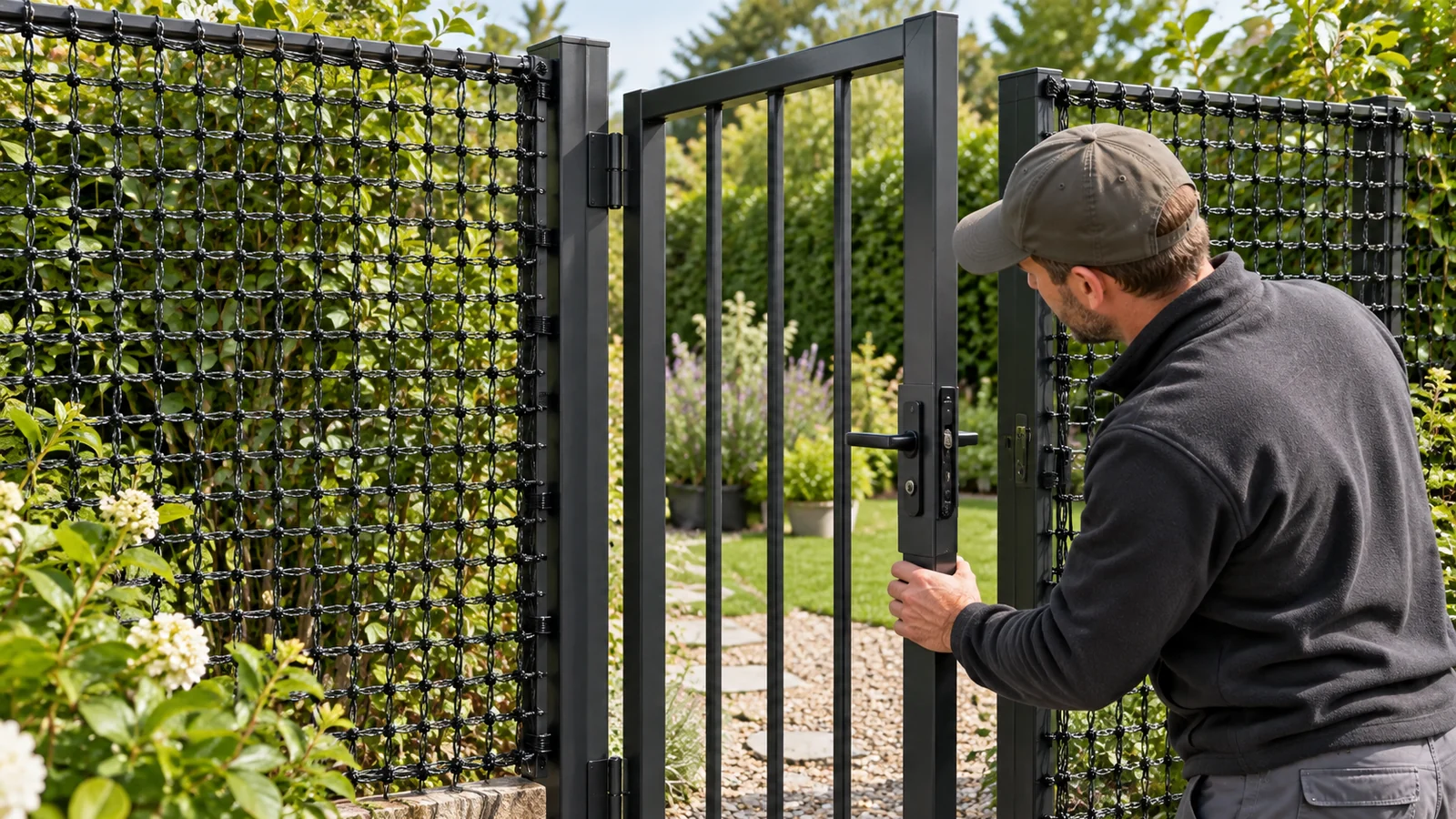
Draw the Gate in Every Operating Position
Photograph the gate closed, partly open and fully open. Record opening direction, leaf width and height, hinge axis, latch, drop bolt, closer, stop and any ground slope. Measure the clear distance from the proposed fixed net plane to every moving part. A front photograph alone can hide the sweep that determines the boundary.
Mark the left return, right return, overhead condition and threshold as separate edges. Give each fixed bay a panel code. If the gate leaf will carry any netted infill, identify it as a different moving panel with its own edge and movement review. Keep a fixed tensioned panel away from the hinge line.
The existing wire-reinforced netting guide for aviary side panels shows how fixed frames, access doors and panel labels belong in one schedule. A garden gate adds daily passage, latch handling and an outdoor ground interface, so its closure check needs a separate plan.
Keep Hinge and Latch Access Usable
Define a no-interference zone around hinges, closer arms, handles and the latch keeper. Confirm that the gate can reach its approved stop without rubbing the net or perimeter components. The design should also let an operator reach the latch without pulling on the mesh.
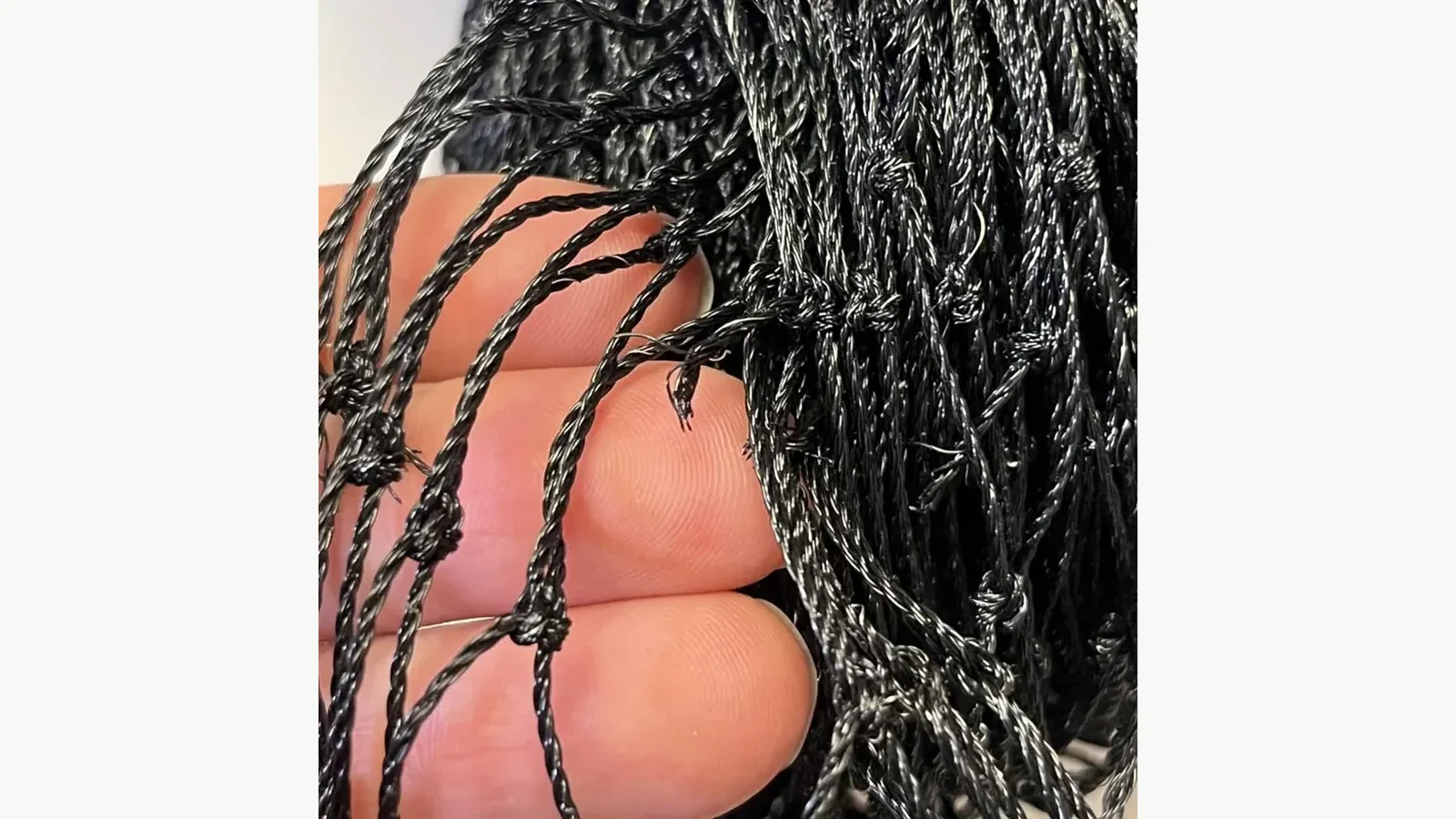
Look at the bottom edge in both dry and wet site conditions. Gravel, soil, pavers, drainage channels and vegetation can change the gap or obstruct the leaf. Record the maximum perimeter gap permitted by the project owner and show how the chosen detail will be inspected. The 30 mm catalogue mesh does not define acceptable gaps at posts or ground level.
If a removable inspection section is needed, draw its edges, closure, custody and normal closed position. A loose overlap is difficult to audit. Label the section and include it in every handover check so maintenance access does not quietly become a permanent opening.
Match the Fixed Returns to the Substrate
List each substrate: masonry pier, timber post, coated steel frame, fence panel or wall return. The fixing concept must be approved for the real material and condition. Drilled and no-drill approaches may be available, while accessory inclusion and suitability remain order- and site-specific.
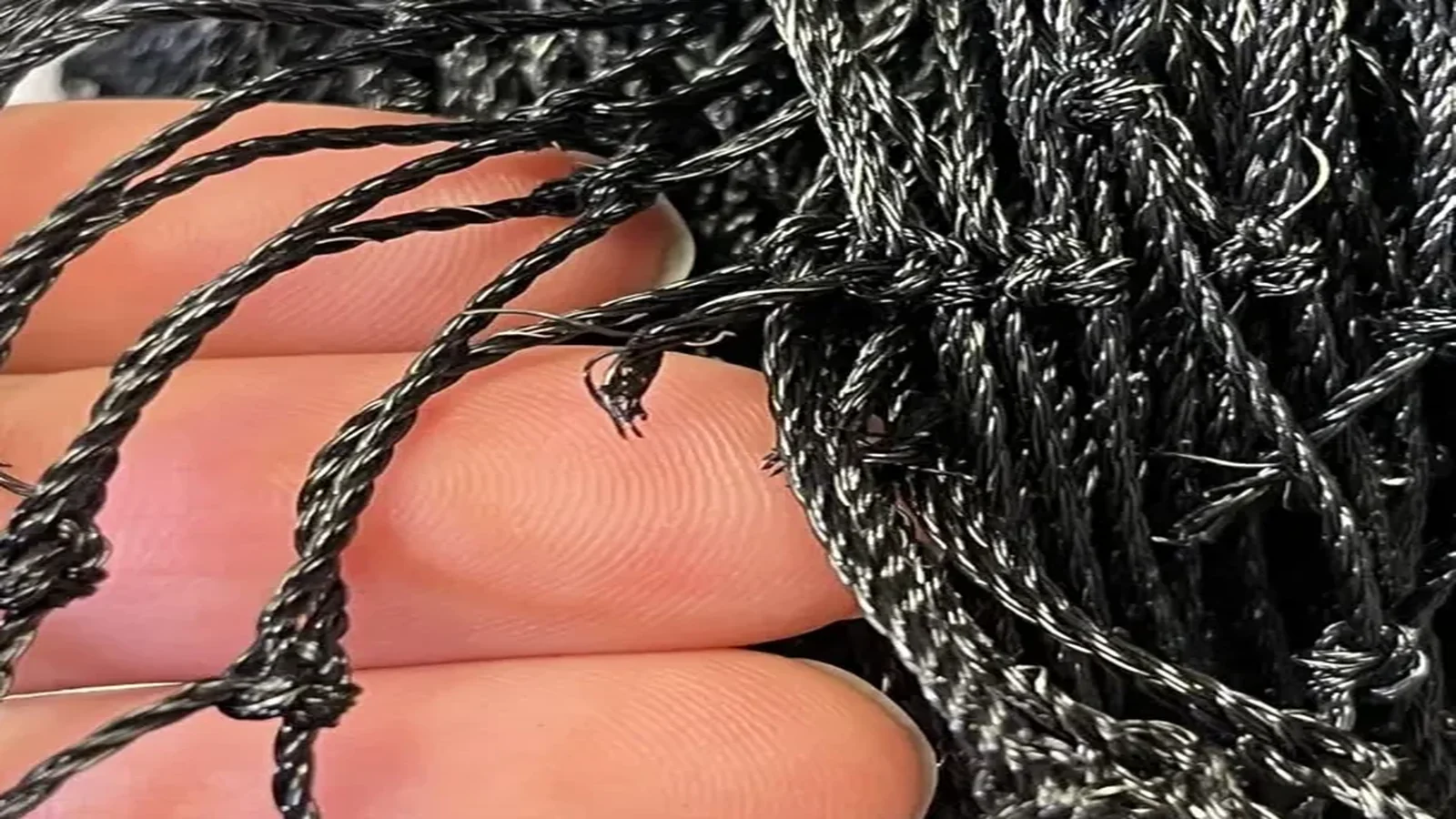
Ask for a representative edge sample where the return meets the gate post. Inspect mesh orientation, tension, component seating, corner treatment and whether the fixing affects gate hardware or protective coatings. A successful straight fence bay does not automatically approve the hinge-side return.
Specify 12+1, 15+3 or 18+6 explicitly and ask the supplier to explain the offered construction on a labelled sample. Record color, panel dimensions, roll or cut format, accessories, packaging and batch identity. Strand notation must not be turned into an unsupported strength rating.
Handover the Boundary as an Operating System
After installation, operate the gate through every approved position. Inspect both returns, corners, hinge side, latch side, threshold and any removable section while the gate is closed. Photograph the final closed boundary and retain the panel schedule, fixing map, product sample and inspection owner.
Repeat the check after hinge adjustment, gate sag, resurfacing, storm damage, vegetation growth, mesh removal or hardware replacement. The product is for pet-boundary planning and must not be presented as child fall protection. Local building, access and animal-care requirements remain project responsibilities.
Related Wire-Reinforced Net Controls
- Inspect cuts, abrasion and exposed wire before planning replacement
- Plan continuous-roll panel seams, labels and cut lengths
- Approve black, olive, beige or white by elevation and lot
Request a Garden-Gate Boundary Review
Send photographs in every gate position, opening dimensions, hinge and latch details, substrate notes, proposed net construction, color and access needs through the Max Cat Net inquiry page. Ask for the moving leaf, fixed returns and inspection section to be returned as separate labelled parts of the proposal.