
A crushed carton, torn bag, wet patch, loose accessory pouch, or net protruding from a package is a reason to preserve the receiving condition before material is unpacked and distributed. It is not yet proof that every roll or panel is unusable. The inspection needs to connect outer damage with specific item codes, panel or roll IDs, accessory sets, and visible product condition. Tangles, cut strands, deformation, contamination, and missing components are different findings and should remain separate in the record.
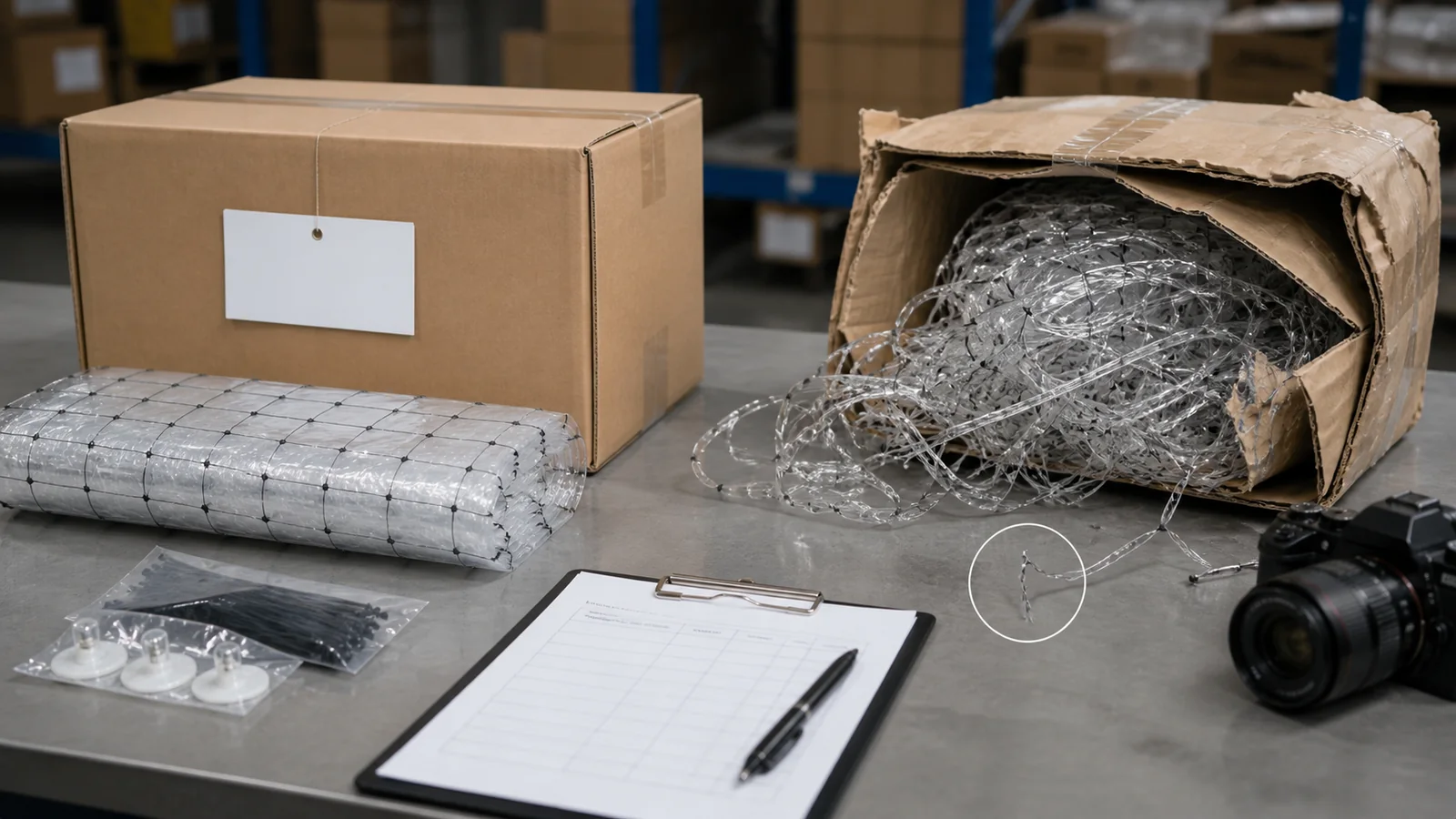
Photograph the Shipment Before Moving It Apart
Capture pallet or carton arrangement, all sides of affected packages, labels, seals, tears, compression, water marks, protruding material, and loose pieces in the surrounding area. Include shipment reference, package count, receiving time, and carrier documents according to the buyer's process.
Assign every affected package an ID and mark whether it contains roll stock, pre-cut panels, accessories, or a mixed kit. Keep apparently intact packages from the same lot identifiable for comparison. Avoid dragging a damaged carton by exposed net because this can add tears and destroy the original condition.
Choose a Controlled Opening Sequence
Open the worst affected package in a clean, well-lit area with enough support for the net. Follow safe cutting practices so knives or scissors never contact the product. Photograph each packaging layer as it is removed. Keep tags, bags, cores, ties, and accessory pouches with the package ID.
If the first opening shows contamination, severe tangling, cut strands, or displaced accessories, pause and define the sample plan before opening the whole shipment. Broad unpacking can convert a localized claim into untraceable mixed stock.
Inspect Rolls Without Forcing Them Flat
Check core crushing, telescoping layers, tight folds, trapped hardware, contamination, uneven winding, visible cut strands, and sections pulled through the outer wrap. Support the roll while turning it. Forcing a compressed roll open can create further deformation.
Unroll only the planned inspection length on a clean surface. Observe whether the mesh returns to its expected square pattern under light handling, whether tangles release without strand damage, and whether edges remain identifiable. Record the location along the roll using the package's own length reference method rather than inventing a precise meter point after material has shifted.
Inspect Pre-Cut Panels by Opening ID
Match panel bag, opening ID, revision, listed dimensions, material, color, and edge preparation to the approved schedule. Look for cuts, pulled knots or intersections, distorted perimeter, missing labels, contamination, and mixed panels. Keep dimensions and condition as separate checks: an undamaged panel can still be the wrong item, and a correctly labeled panel can still be damaged.
Lay out only one panel at a time. Place a clean sheet below transparent net so cuts and knots are visible without staining the material. Avoid applying installation tension during receiving; the goal is product condition and identity, not site acceptance.
Count Accessories as Their Own Package
Use the approved packing list to count accessory pouches, cable or line components, ties, hooks, anchors, labels, or other ordered items. The exact accessory set depends on the order and installer-approved method. A torn carton may release a pouch even when the net remains intact.
Record missing, loose, contaminated, or mixed components separately from net damage. The distributor packing guide explains why rolls, panels, and kits need distinct identities. Hardware suitability remains an installer and substrate decision.
Classify Findings and Quarantine Clearly
Use categories such as outer packaging only, compressed but pending review, tangled with no visible cut, visible strand or wire damage, contaminated, wrong identity, missing accessory, or unverified. Keep affected packages and opened samples in a designated area. Avoid labels that announce a cause before supplier and logistics evidence is reviewed.
Where the buyer's quality process permits, compare an intact package from the same item and lot. Record mesh appearance, roll shape, panel packing, and accessory arrangement. The mesh and strand specification article supports identity checks without turning a visual comparison into a laboratory result.
Release Material to Installers With Traceability
Release only packages that meet the buyer's approved receiving decision and remain linked to item, lot, opening, and accessory scope. Tell installers which packages were opened for inspection and which findings still need site observation. An apparently recovered tangle may need careful panel layout before use.
Send the supplier a concise pack: shipment and package IDs, before-opening photos, opening sequence, affected item list, damage map, accessory count, comparison package, requested action, and retained-sample location. This gives the supplier a better basis for replacement, sorting, or process review.
Buyer Checklist
- Photograph package arrangement and all visible damage before unpacking.
- Assign package IDs and keep labels, bags, cores, and accessories together.
- Open selected packages on a clean supported surface.
- Inspect rolls for crushing, tangles, cuts, contamination, and winding condition.
- Inspect panels by opening ID, revision, edge, and visible mesh condition.
- Count accessory sets separately and record loose or missing items.
- Quarantine uncertain material and preserve comparison packages.
Frequently Asked Questions
Can a tangled cat net be accepted after it is untangled?
Acceptance depends on the approved process and whether the material, intersections, edges, dimensions, and appearance remain suitable after controlled inspection. The original damage still belongs in the record.
Should every damaged carton be opened?
Use the buyer's sampling and claim process. Opening everything immediately can destroy packaging evidence and mix lots or panel identities.
Can installers decide whether damaged material is usable?
Installers can provide important site and handling observations, while the buyer's quality process and agreed supplier response control commercial acceptance.
Related Product or Reading
Use the cat net distributor packing guide to compare the damaged shipment with the intended roll, panel, label, and accessory configuration.
Discuss the Exact Project
Use the MaxCatNet contact page to share item and package IDs, material variant, roll or panel schedule, damage photographs, opening sequence, mesh findings, accessory count, retained samples, and requested response.