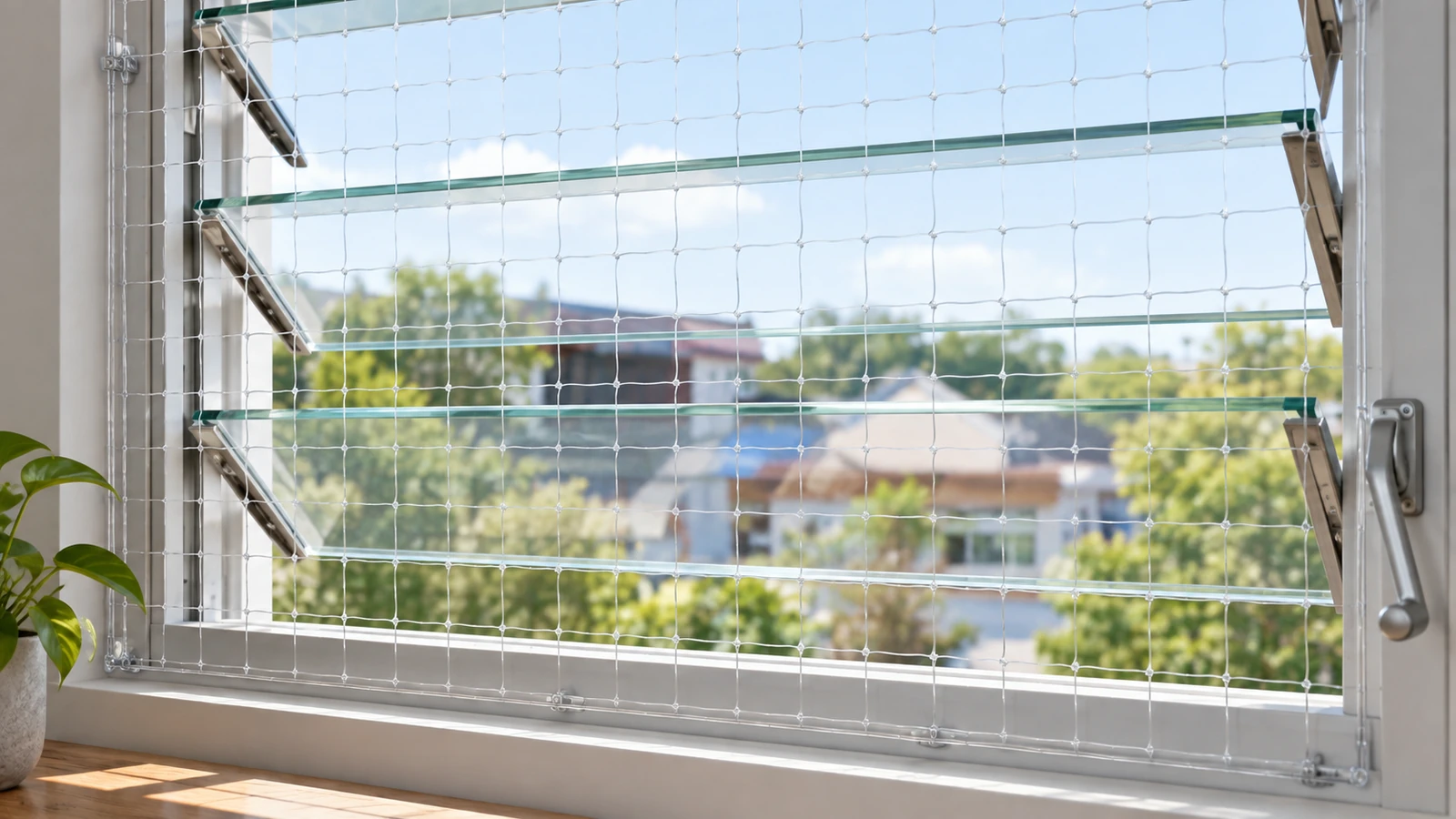
A louvered or jalousie window is not one fixed opening. Its glass blades rotate, the crank or lever needs a hand path, and the frame often has narrow surfaces around hinges and operators. A cat-net quotation should therefore begin with the full movement envelope, not just the visible width and height.
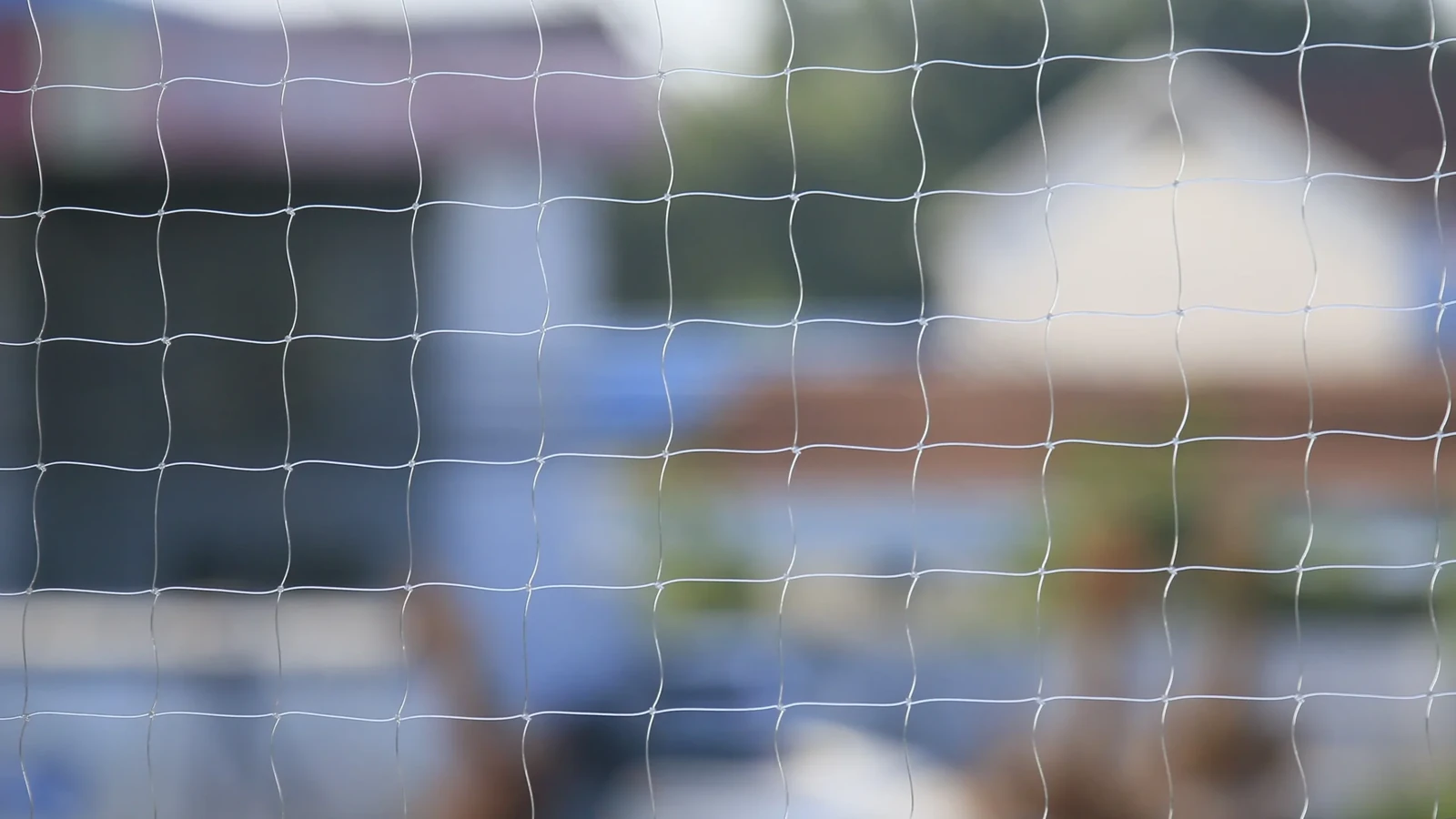
The transparent nylon cat net uses 0.40 mm monofilament with a documented 30 × 30 mm mesh and can be supplied in standard or custom sizes. Product identity alone does not decide the fixing method. The actual frame material, blade direction, operator position and permission to drill still have to be surveyed at the opening.
Record Every Moving Part
Photograph the window closed, partly open and fully open. Mark the highest and lowest blade edges through the full rotation. Record the crank handle's sweep, the hand clearance needed to operate it and any removable insect screen. If multiple windows share one opening, label each bay separately.
Measure the clear opening and the candidate fixing plane, but also measure the shortest distance from that plane to a moving blade. A net line that looks clear when the blades are closed may be struck when they rotate. Keep handles, locks and maintenance screws accessible.
Choose a Fixing Boundary From the Real Frame
The preferred boundary is a continuous, stable perimeter outside the blade and crank movement. Confirm whether that surface is metal, masonry, timber, tile or another finish. Record its usable width, corners, gaps and interruptions. A supplier can size netting and accessories only after the installer confirms which fixing method is permitted and suitable for that substrate.
No-drill accessories can be discussed where drilling is restricted, but the substrate, surface condition, adhesive system and approved installation guidance still require project-specific approval. Avoid treating one fixing method as universal. The installation contractor remains responsible for verifying the actual surface and carrying out the installation correctly.
Plan Crank and Cleaning Access
If the operator sits inside the net boundary, plan a controlled access point rather than cutting an unrecorded opening after delivery. Specify its location, finished size, closure method and inspection routine. Keep the access small enough to manage yet large enough for normal operation and cleaning.
The earlier casement-window cat-net survey explains how moving sash and handle paths are separated from a fixing line. A louvered window is different because several blades rotate together, so the survey must show every blade edge and the crank mechanism.
Send a Quotation Drawing, Not One Measurement
For each opening, provide a front photo, side photo, overall width and height, perimeter dimensions, blade projection at full opening, crank position, proposed net side, fixing substrate and any removable-access requirement. Add a simple sketch with opening ID and measurement units. If the project has repeated windows, verify at least one opening from each construction type instead of assuming all are identical.
Inspect the Finished Opening Through Its Full Cycle
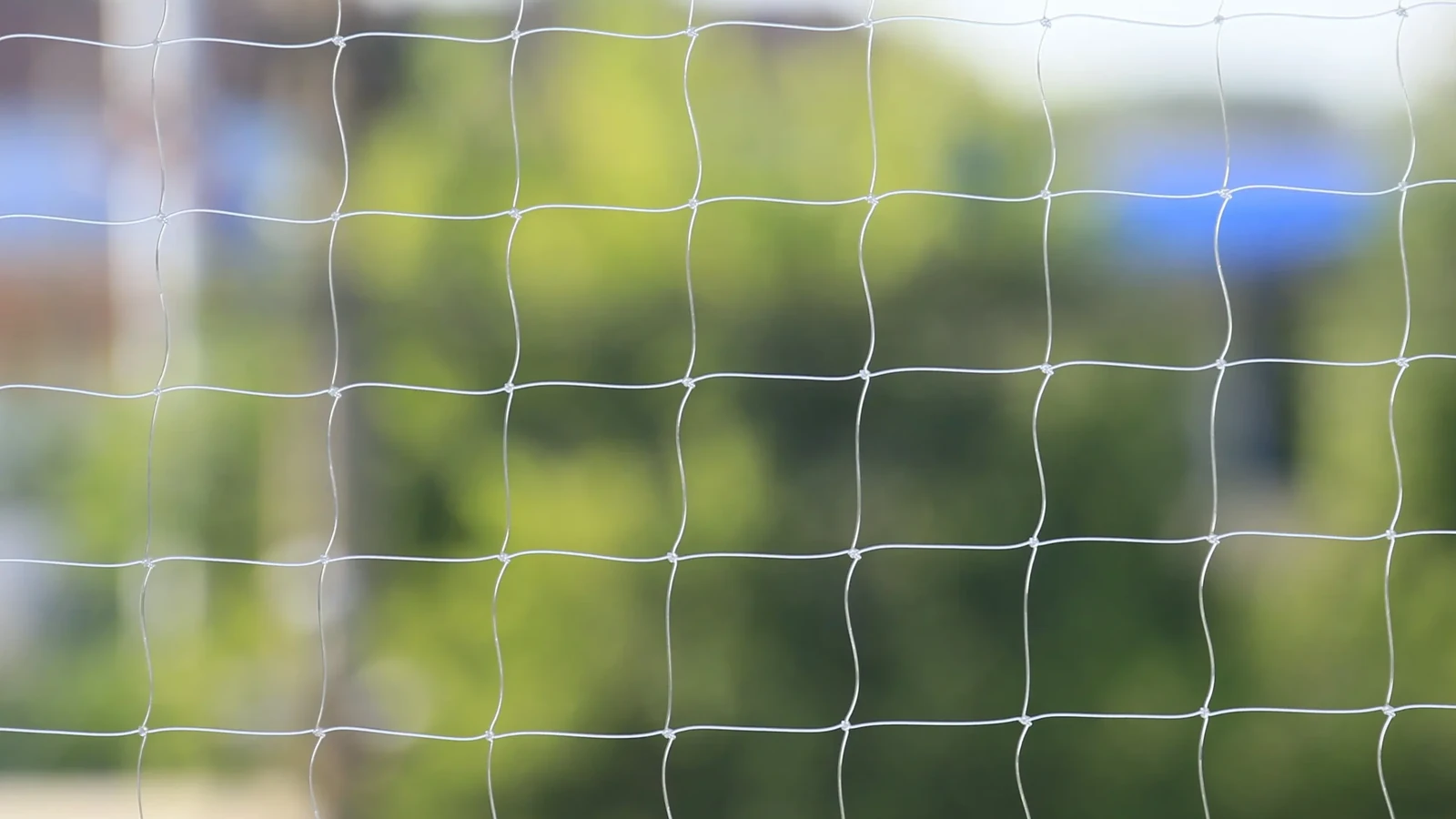
After installation, operate the blades slowly from closed to fully open while watching for contact with the mesh, edge cord or fixings. Check crank access, corner continuity and any service closure. Record the opening ID, installer, date and photographs. Cat netting is one protective measure; ongoing inspection and responsible supervision remain necessary.
Related Window Survey Guides
- Survey cat netting for skylights and opening-direction conflicts
- Map both sashes and screen channels on double-hung windows
- Measure arched windows as separate planes and fixing segments
Request an Opening-Specific Net Quote
Send the opening IDs, photographs in three blade positions, perimeter measurements, crank location, substrate, drilling restrictions, preferred net color and required kit quantities through the Max Cat Net contact page. Ask the supplier to confirm the net size and kit scope against the marked survey.