A distributor sample can answer useful questions about mesh appearance, strand type, color, edge finish, accessories, and packaging. It cannot prove every installation outcome or create an absolute protection guarantee. The approval record needs to state exactly what was checked and which requirements remain part of production or installer control.
Keep the Two Product Variants Separate
MaxCatNet's current scope includes transparent nylon cat net and stainless-steel-wire-reinforced cat net. Create separate sample IDs, specifications, photographs, and approval decisions for each.
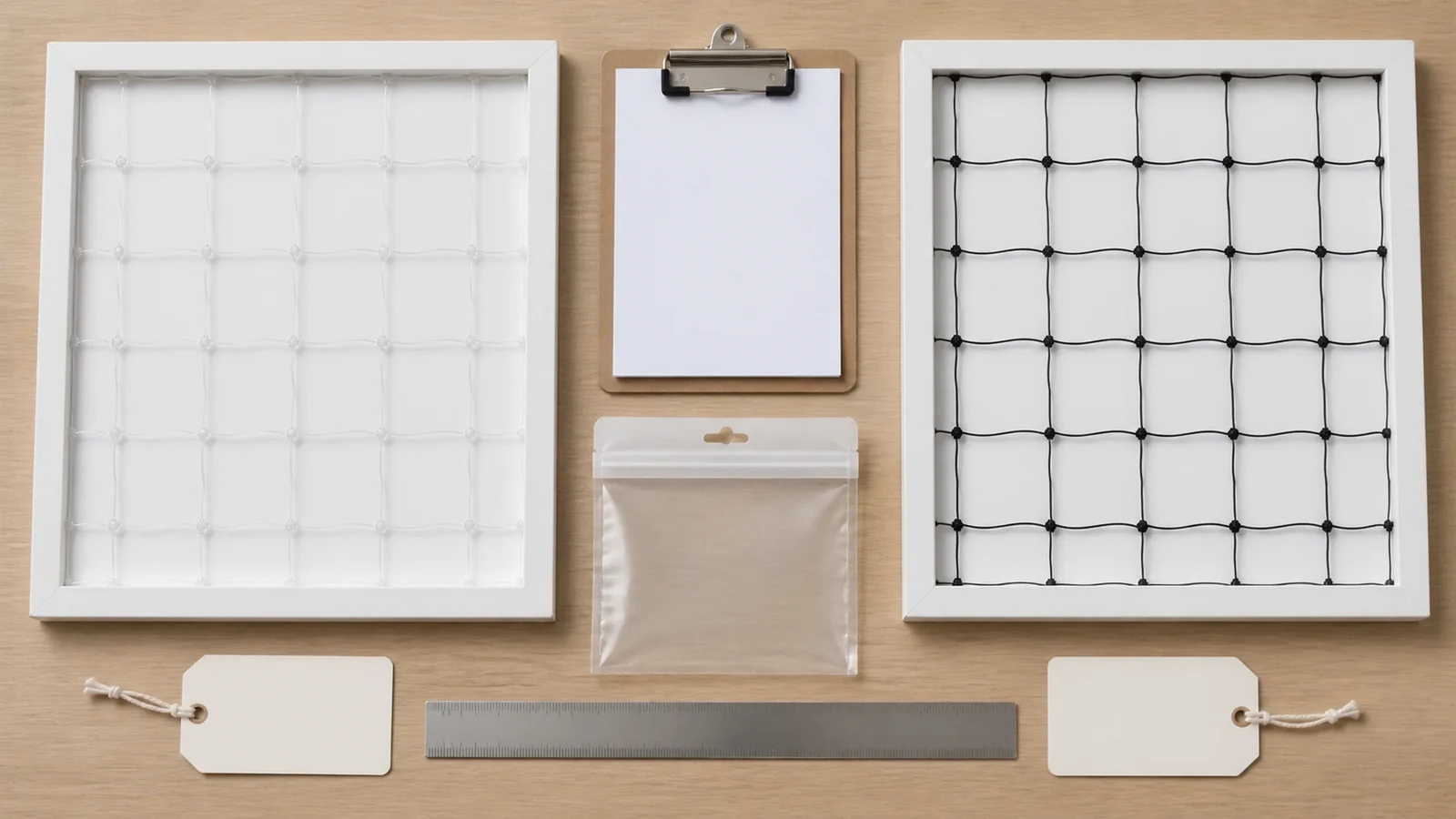
The transparent nylon version should be reviewed for its fine, visually restrained mesh appearance against relevant backgrounds. Lighting and distance affect visibility, so record the viewing conditions.
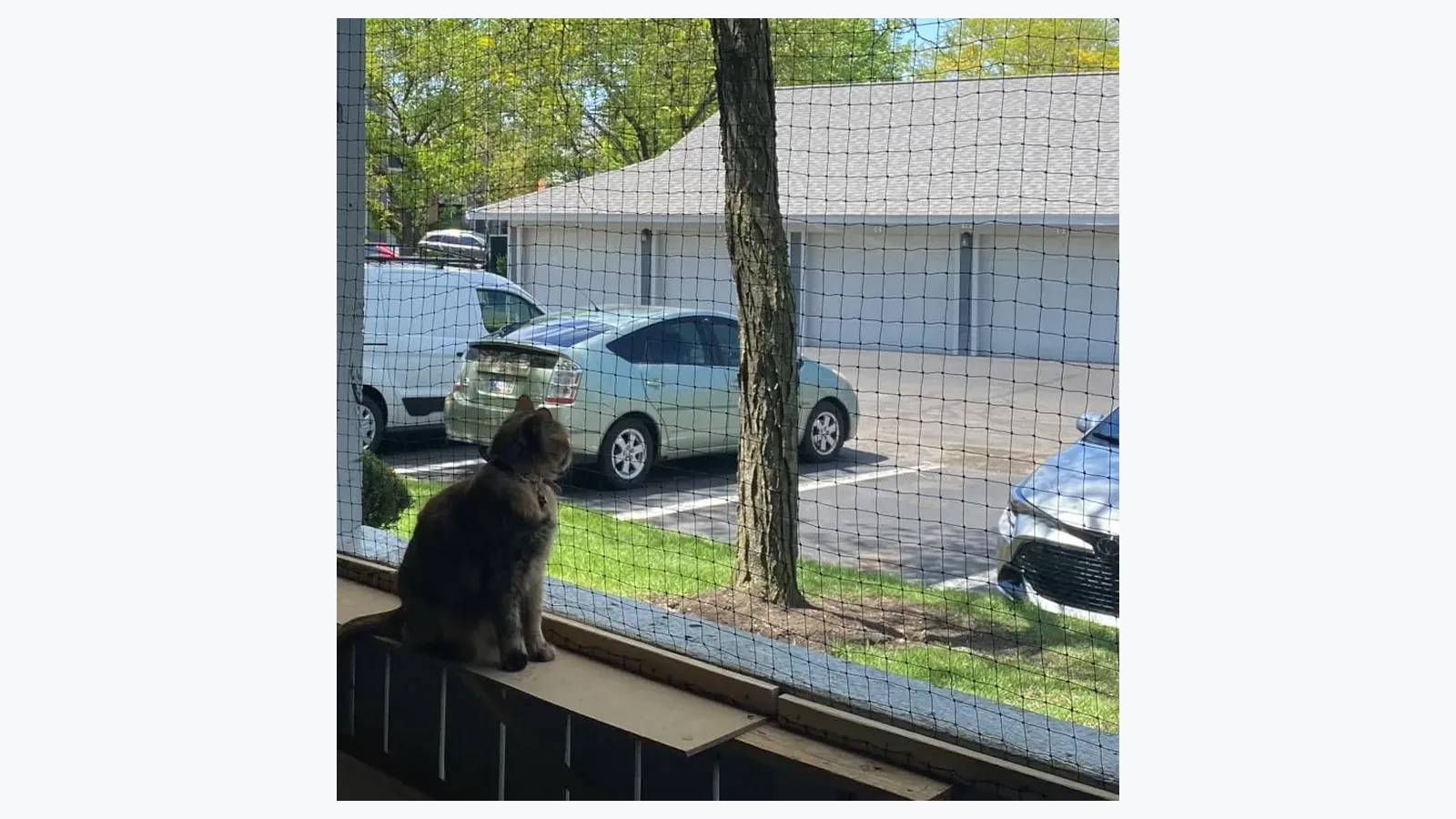
The wire-reinforced version has a different strand construction and black appearance. Avoid approving one sample and extending that decision to the other product.
Assign a Traceable Sample ID
Label the sample with product variant, mesh specification, strand specification, color, edge finish, accessory set, supplier reference, date, and revision. Photograph the label beside the complete sample.
Keep shipment packaging and delivery condition in the record. A sample damaged in transit may not represent the intended finish.
Use the terminology in the mesh size and strand specification article so buyer and supplier refer to the same fields.
Inspect Mesh Geometry
Lay the sample without stretching it beyond the agreed method. Record mesh opening shape, nominal size, knot or intersection appearance, and uniformity across several positions. State the measurement method and whether the sample was under controlled tension.
| Sample Field | Record | Approval Boundary |
|---|---|---|
| Mesh opening | Method, locations, values | Applies to measured sample |
| Strand | Product identity and measured field | Uses agreed tool and method |
| Color | Lighting, background, reference | Visual approval under recorded conditions |
| Edge | Cut, finished, reinforced, or labeled | Matches quoted panel preparation |
| Accessories | Type, quantity, finish, packaging | Itemized set only |
Avoid measuring only the most regular opening. A defined sample pattern provides a better view of consistency.
Review Strand and Surface Appearance
For transparent nylon net, inspect clarity, surface, kinks, discoloration, and handling marks. For wire-reinforced net, inspect coating appearance, exposed wire, sharp damage, uneven covering, and bends.
Use close photographs with a neutral background and scale reference. A phone macro image can exaggerate texture, so include normal viewing distance as well.
Any strength, weathering, or bite-resistance requirement needs an agreed specification and evidence path. Visual appearance alone cannot establish it.
Check Color Under Controlled Conditions
View the sample against light and dark backgrounds, indoors and in representative daylight where practical. Record camera settings only as supporting information; screens and automatic image processing can shift appearance.
If color matching is commercially important, agree on a physical reference or defined color standard and an acceptance method. A screenshot is unsuitable as the only master.
Keep transparent appearance distinct from invisibility. Even fine net can be visible depending on background and lighting.
Review Edge Finish and Panel Preparation
Inspect how the sample is cut, tied, reinforced, or prepared for connection to the intended perimeter system. Record loose ends, damaged strands, edge labels, and whether the sample represents a raw roll or a finished panel.
The edge finishing and fixing-point article explains the installation relationship. Sample approval should identify whether perimeter hardware is included, shown only for reference, or excluded.
Avoid testing an unapproved knot or modification and treating it as the supplier's production method.
Itemize Accessories
List every sample accessory by name, material or finish where confirmed, quantity, dimensions where applicable, and packaging. Photograph the complete set and individual details.
Ask which accessories are standard, optional, or selected by the installer according to substrate. A sample hook or cable does not prove suitability for every balcony.
Connect the itemized set with the distributor packing article before bulk-order packaging is approved.
Define Any Testing Separately
Handling, dimensional, material, and installation tests need written methods, sample quantities, equipment, conditions, and acceptance criteria. Avoid improvised pulling, biting, hanging-weight, or fall simulations.
If a test consumes or damages the sample, retain an untouched comparison sample. Record tested and retained IDs separately.
Supplier documents and qualified installation evaluation may be needed for claims beyond visual and dimensional inspection.
Create an Approval Matrix
Mark every field approved, rejected, conditionally approved, or open. Add comments and required supplier action. A general "sample approved" signature is weak when color is accepted but edge finish remains open.
Attach photographs, measurement sheets, accessory list, packaging notes, and the commercial quotation revision. Preserve the date and approver role.
Retain a Golden Sample
Store an approved reference sample in a clean, labeled location away from uncontrolled light, heat, moisture, and handling. Record storage date and condition. Physical samples can change, so pair them with photographs and written specifications.
For reorders, compare the new sample or shipment with the controlled specification and retained reference. Document any intentional revision instead of replacing the old sample silently.
Translate Approval Into Production Controls
Before a bulk order is released, copy each accepted field into the purchase specification and supplier acknowledgment. Identify which points are verified by material documents, production records, shipment sampling, or retained samples. Assign open conditions an owner and deadline. This step matters because a sample can look correct while its packaging, panel preparation, or accessory combination remains undefined. Approval becomes useful only when the production and receiving teams can trace it to measurable order fields.
Related Reading
- Nylon vs Wire-Reinforced Cat Net explains material-choice considerations.
- Cat Net Mesh Size and Strand Specification supports objective sample fields.
Common Questions
Can photos replace a physical sample?
Photos support appearance review, but dimensions, handling, edge detail, and physical comparison may require a real sample.
Does an approved color look identical in every installation?
Background, lighting, viewing distance, and camera processing affect appearance. Record the approval conditions.
Can one sample approve both net variants?
No. Transparent nylon and wire-reinforced net remain separate product identities.
What should be kept for a reorder?
Keep the specification, approval matrix, photos, measurements, accessory list, packaging record, and retained sample where practical.
Request a Controlled Sample Set
Use the MaxCatNet contact page to identify the product variant, mesh and strand fields, color, edge preparation, accessory set, packaging, destination market, and approval evidence needed before bulk ordering.