
A cat net for multiple cats still uses the same verified product choices: transparent nylon cat protection net or stainless steel wire-reinforced cat net. What changes is the household assessment. One cat may ignore the boundary, another may climb, and a third may chew or rush toward movement outside. Planning around the calmest animal leaves the more active behavior unexplained.
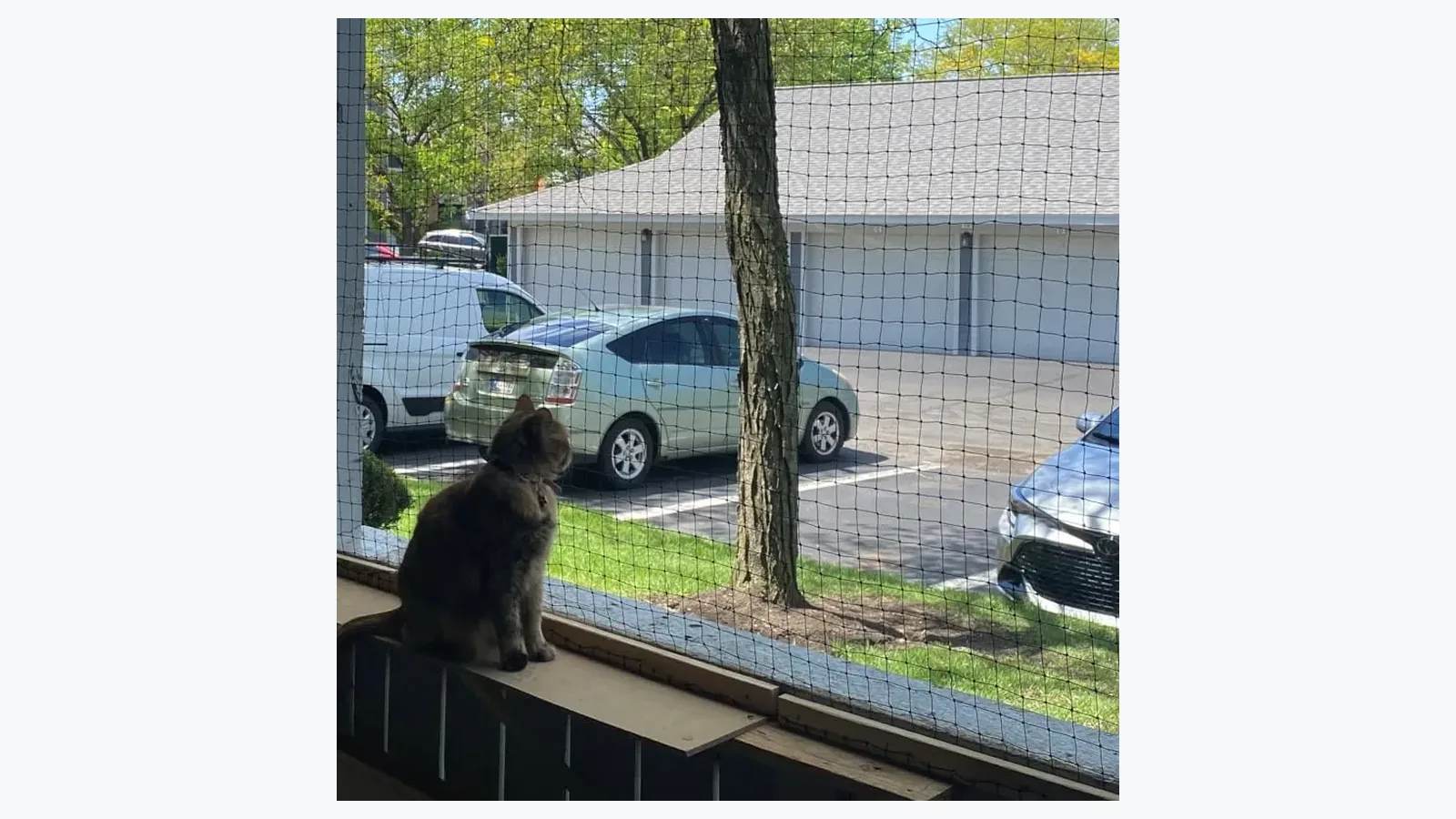
Profile Each Cat Separately
Use observation, not a single household label. Record where each cat sits, climbs, scratches, chews, jumps, or watches outdoor activity. Include age, mobility, body size, and any recent change in behavior as practical context, without turning those notes into a prediction.
| Observation | Planning Question |
|---|---|
| Cat chews cord, mesh, or plastic items | Is a wire-reinforced option worth discussing? |
| Cat climbs curtains or screens | Which corners, side returns, and overhead boundaries need closer review? |
| Cat rests quietly on one ledge | Could another cat approach from behind and change the movement pattern? |
| Cats chase each other | Are furniture, planters, rails, or shelves creating a fast route toward the boundary? |
| Senior or less mobile cat | Does the layout still need to account for a younger or visiting cat? |
The table is a conversation aid, not a safety rating. Behavior can change with noise, birds, insects, visitors, conflict, or a new piece of furniture.
Map Shared Routes and Conflict Points
Multiple cats can use the same balcony differently. Draw the opening and mark doors, windows, rails, side gaps, overhead areas, pipes, planters, furniture, and preferred resting places. Then mark where two cats meet or pass.
A narrow ledge may be uneventful for one cat but become a pressure point when another cat approaches. A chair that seems unrelated to the installation may create a step toward an upper edge. A plant stand can move after installation and change the route. Keep movable objects in the site review because the installed net is only one part of the environment.
The map also helps an installer see whether a floor-to-ceiling boundary is possible and whether side or top conditions need a different solution. Open-top balconies and irregular obstacles require their own feasibility review.
Choose Material for the Highest Relevant Behavior
Transparent nylon net is less visually prominent and may suit households where visibility is the main concern and chewing pressure is limited. Stainless steel wire-reinforced net adds a coated internal wire structure for buyers who need a more bite-resistant material option. Neither material turns installation into an absolute guarantee.
When one cat chews and the others show no such behavior, base the material discussion on the chewing behavior. When no cat has shown chewing, consider visibility, installation method, opening geometry, maintenance, and buyer preference together. The nylon versus wire-reinforced comparison explains these product differences in more detail.
Request an actual sample when appearance or feel is important. Review strand construction, mesh, color, edge finishing, and how the material will be fixed at the project boundary.
Review Every Boundary, Not Only the Front Opening
The front railing is usually obvious. Side returns, corners, floor gaps, ceiling transitions, drainage areas, pipes, and the door interface are easier to miss. With several cats, different animals may discover different edges.
Ask the installer to explain the full perimeter and the fixing surface at each segment. Where drilling is restricted, confirm what the no-drill method can attach to and whether the existing structure is suitable. Where drilling is allowed, the base material and property rules still need review.
Keep mesh tension and edge finishing consistent enough to avoid obvious loose pockets or unclosed gaps. Excessive tension can distort mesh or overload a weak fixing arrangement, while too much slack can create folds and accessible edges. The correct result depends on the material, opening, and fixing system.
Introduce Access Gradually and Observe
After installation, begin with supervised access and watch each cat. Observe corners, the top boundary, door transitions, furniture routes, and interactions between cats. Record repeated interest rather than assuming that one calm session represents future use.
If a cat chews, climbs, pushes, or focuses on one fixing point, restrict access and have the condition reviewed. Avoid improvised repairs that introduce sharp wire ends, loose ties, or a new gap. Use replacement material and fixing methods that match the installation plan.
The early observation period is also a chance to adjust movable furniture and planters. Increasing distance from the boundary may reduce direct access to vulnerable edges, but the overall layout still needs inspection.
Build a Multi-Cat Inspection Routine
Routine inspection needs visible triggers. Check after severe weather, building work, furniture changes, a new cat joining the household, a change in chewing or climbing, and any contact that stretches or damages the mesh.
Review the entire perimeter, not only the favorite spot of the most active cat. Look for strand damage, coating damage, loose edges, changed tension, moved clips, damaged anchors, sharp ends, and new gaps. Compare with installation photos so slow movement is easier to see.
The cat net maintenance guide provides a broader inspection framework. A household with several cats can add the behavior notes and shared-route map to that record.
Information for a Supplier or Installer
Send clear photos from inside and outside where possible, width and height, side and upper boundaries, railing details, fixing surfaces, doors, windows, obstacles, and property restrictions. Add a short profile for each cat, especially chewing, climbing, pushing, chasing, or strong interest in outdoor movement.
State whether transparent appearance or bite resistance is the main material concern. The verified wire-reinforced cat net product can be discussed alongside the nylon option rather than treated as a universal answer.
Related Reading
- Nylon vs Wire-Reinforced Cat Net supports the material discussion when household behaviors differ.
- Cat Net Maintenance Guide helps turn installation photos into a reinspection routine.
Common Questions
Does a household with several cats always need wire-reinforced net?
No. Material choice depends on observed behavior, opening geometry, fixing method, visibility preference, and maintenance. Chewing behavior is a strong reason to discuss the wire-reinforced option.
Can all cats use the balcony immediately after installation?
Gradual supervised access provides a chance to observe each cat and identify interest in corners, edges, furniture routes, or fixing points.
How often does a multi-cat installation need inspection?
The project, material, exposure, and behavior determine the routine. Add event-based checks after weather, building work, layout changes, damage, or a new behavior.
Discuss a Multi-Cat Opening
Send opening photos, dimensions, fixing surfaces, property limits, and behavior notes through the MaxCatNet contact page. This gives the supplier or installer a clearer basis for discussing material and boundary details.