The labels 12+1, 15+3 and 18+6 identify three listed constructions within the MaxCatNet stainless-steel wire-reinforced cat-net family. They are not interchangeable shorthand for “strong mesh.” A distributor should carry the selected construction code from quotation to sample, purchase order, carton label and receiving record.
The practical goal is traceability. A black 30 mm mesh may look similar at normal viewing distance even when its internal construction code differs. Colour, mesh opening and a general “wire reinforced” description cannot replace the exact 12+1, 15+3 or 18+6 line item.
What the Three Codes Confirm
The exact stainless-steel wire-reinforced cat net product page lists:
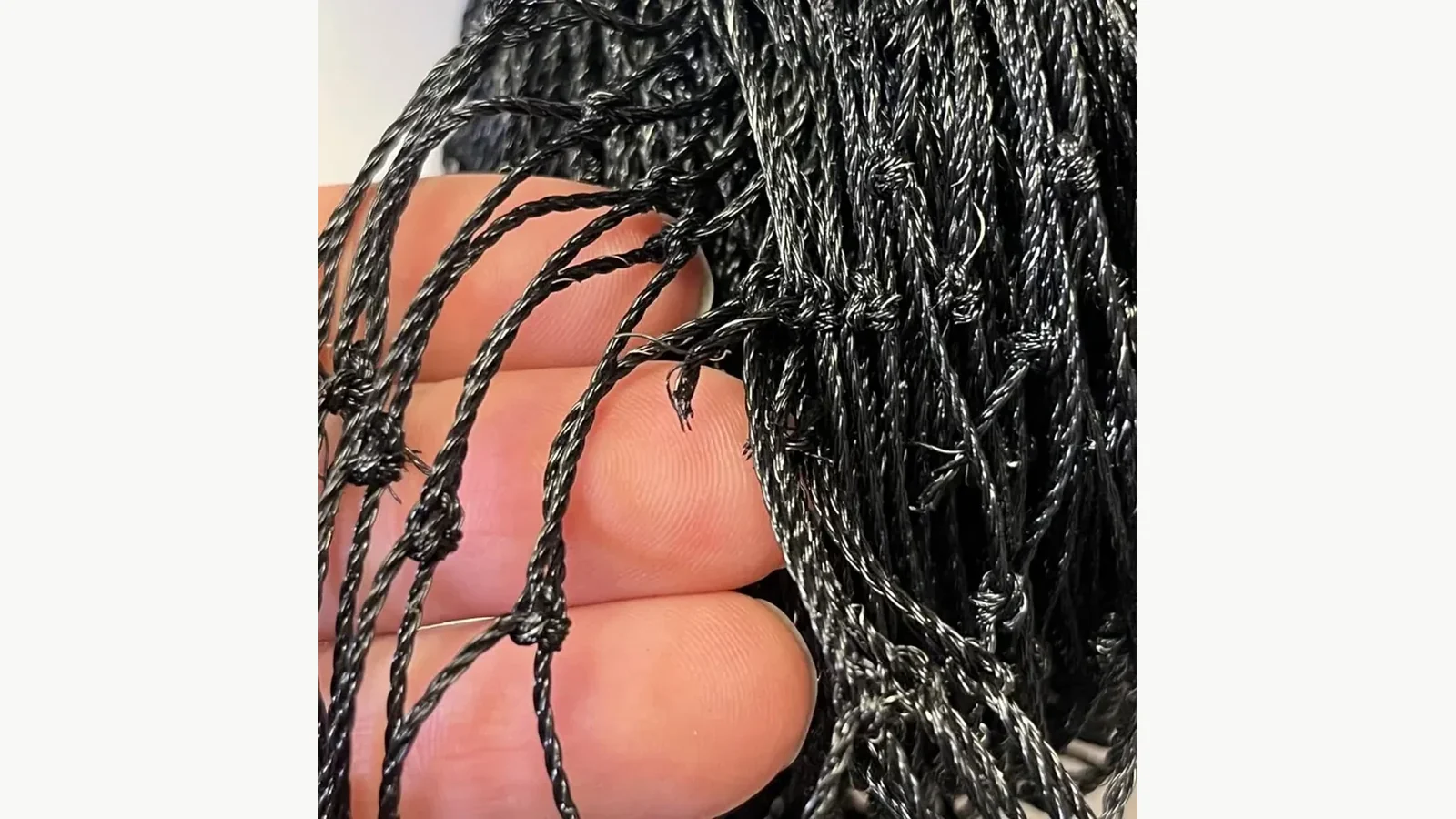
- 12+1: twelve nylon strands plus one stainless-steel wire;
- 15+3: fifteen nylon strands plus three stainless-steel wires;
- 18+6: eighteen nylon strands plus six stainless-steel wires.
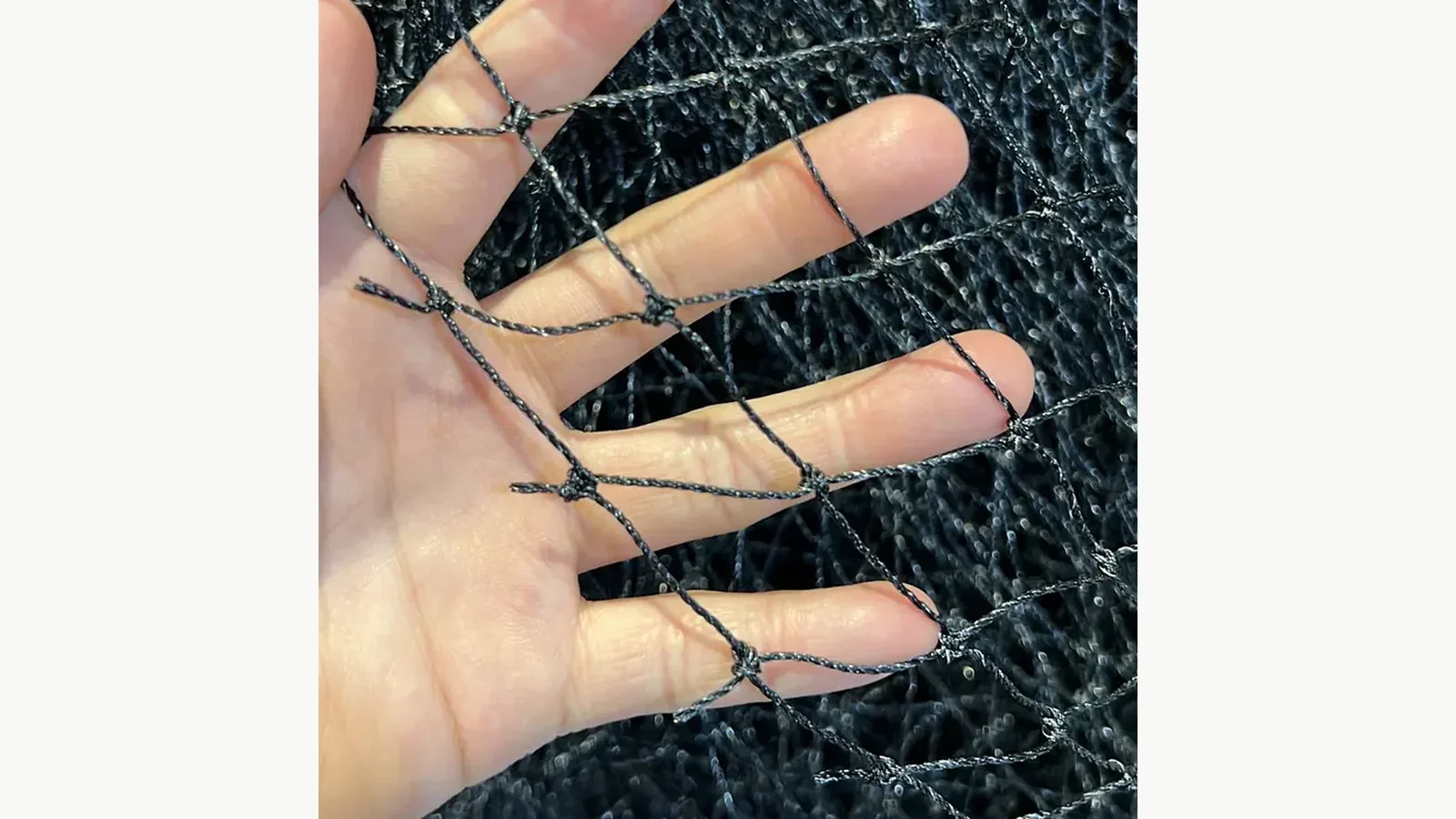
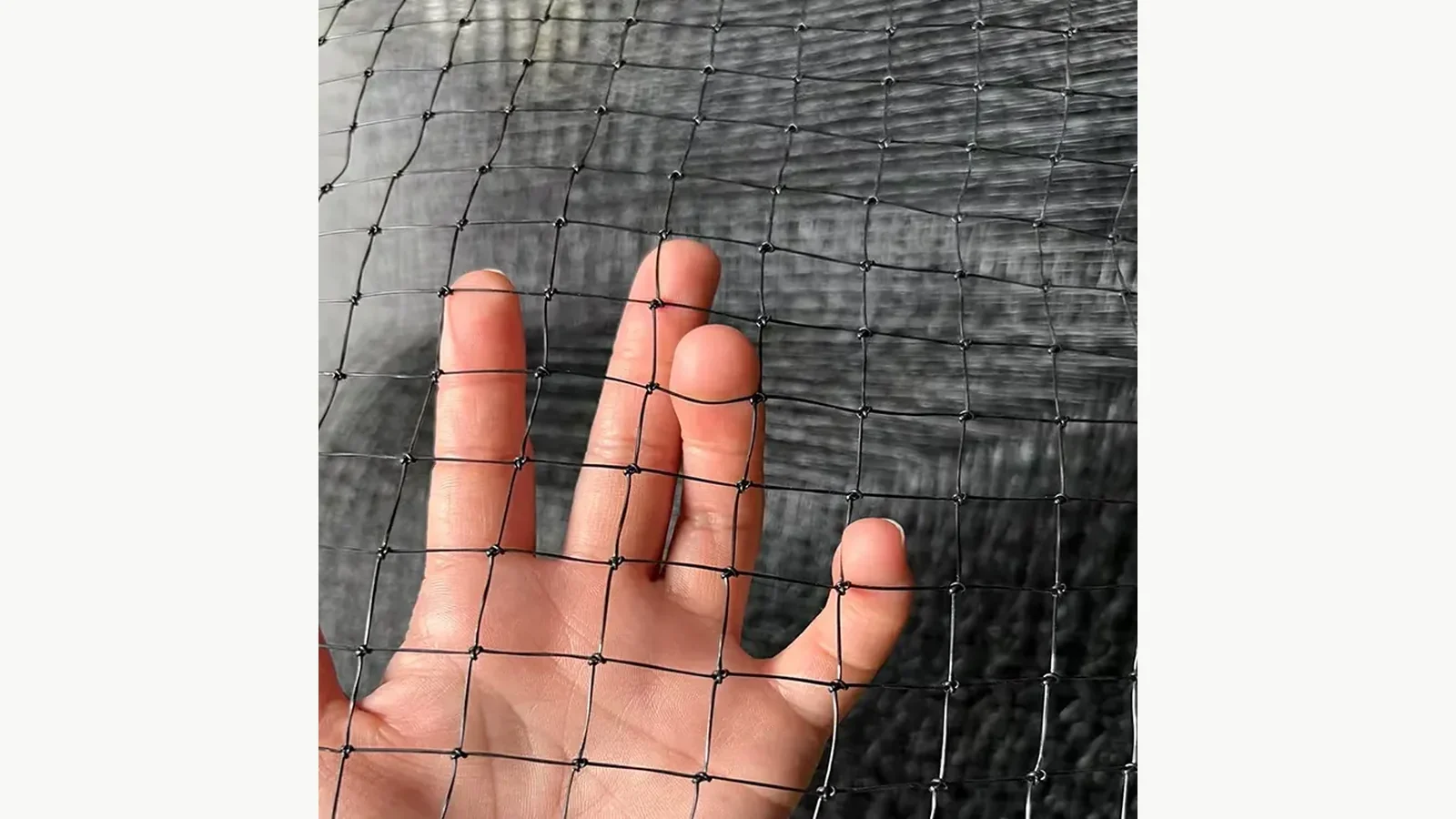
The same product record lists a 1.0 mm finished strand and 30 × 30 mm mesh opening, with black, olive green, beige and white colour options. Drilled and no-drill installation approaches are also available. These shared fields make construction-code control more important: two order lines can share colour and mesh size while still being different products.
The published record describes 12+1 as the most commonly selected version and 18+6 as a heavy-duty option. That supports a product-range discussion, but it does not create a universal rule for every cat, balcony, window or fixing condition. The buyer still has to document the site, expected animal behaviour, fixing boundary, installation method and inspection plan.
Keep Construction Separate From the Other Mesh Fields
The existing cat-net mesh size and strand-diameter guide explains how mesh opening and finished strand diameter should be recorded. Construction code is an additional field, not a replacement for either one.
| Controlled field | Example order value | What it prevents |
|---|---|---|
| Product family | Stainless-steel wire-reinforced cat net | Mixing with transparent monofilament nylon net |
| Construction | 12+1, 15+3 or 18+6 | Silent substitution between listed structures |
| Finished strand | 1.0 mm | A same-code but different strand-size assumption |
| Mesh opening | 30 × 30 mm | A same-material but wrong opening |
| Colour | Black, olive green, beige or white | Mixed visual SKUs |
| Panel or roll size | Exact dimensions and tolerance | Cutting and allocation errors |
| Installation set | Drilled or no-drill components | Missing or incompatible accessories |
| Label code | Buyer SKU plus supplier code | Loss of identity after packing |
This table also protects the transparent nylon product. A 0.40 mm transparent monofilament net is a different entity with no steel core. It cannot be treated as a colour variation of the reinforced family.
Choose the Code Through a Documented Use Case
A distributor can start with three questions.
First, where will the mesh be used? Record the opening type, exposure, dimensions, edge geometry and whether the installation is indoors, outdoors, sheltered or fully exposed. Site photos help, but measured dimensions and named fixing surfaces remain essential.
Second, what behaviour or handling concern drives the reinforced construction? Describe observed chewing, scratching, climbing, repeated contact, shared-animal use or installer handling without turning it into an absolute safety claim. The supplier can then review the listed structures against a real requirement.
Third, how will the mesh be fixed and inspected? The product construction cannot compensate for an incomplete boundary, a weak fixing surface, a blocked access route or neglected damage. Construction, fixing and maintenance are separate approvals.
This sequence produces a defensible recommendation. “Use the highest number” is not a selection method, and “12+1 is popular” is not proof that it suits every site.
Build a Sample Card That Survives Handoffs
A useful sample is more than a loose mesh piece. Attach a card or sealed record containing:
- supplier sample code and date;
- buyer SKU and intended market;
- exact 12+1, 15+3 or 18+6 declaration;
- 1.0 mm strand and 30 × 30 mm opening;
- colour;
- panel or roll form;
- planned installation set;
- approved visual and dimensional checks;
- quotation and purchase-order revision;
- retained-sample location.
The card matters because the internal strand count is not reliably established by looking at an installed panel from a distance. The supplier declaration, retained sample and agreed inspection method must point to the same construction.
If the buyer needs independent material or construction verification, name the method, sample quantity and report format in the order. A generic photo cannot replace that requirement.
Control the Code in Quotation and Purchase Order
Use one line per construction. For example:
Wire-reinforced cat net / 15+3 construction / 1.0 mm finished strand / 30 × 30 mm mesh / black / specified roll or panel / accessory set / label artwork revision.
Add quantity, packing, tolerance, documentation and destination on the same line. If 12+1 and 18+6 are both ordered, assign different buyer SKUs and carton marks. Avoid a description such as “black steel cat net, assorted.” It removes the very distinction the catalogue provides.
The purchase order should state that changes to construction, strand, mesh opening, colour, size or accessory set require written approval. A supplier cannot prove equivalence simply by matching the visible colour.
Prevent Mixing During Packing and Receiving
At packing, keep the construction code on the inner item label, outer carton and packing list. When multiple SKUs share the same colour, use a large readable code plus a second identifier such as buyer SKU or barcode. A colour sticker alone is vulnerable to printing and handling errors.
At receipt, sample cartons across the shipment. Reconcile:
- carton mark and packing-list line;
- buyer SKU and supplier code;
- construction declaration;
- strand and mesh-opening checks;
- colour and size;
- accessory set;
- retained-sample reference;
- visible cuts, tangles, abrasion or exposed wire.
Damage assessment stays separate from construction identity. A correct 18+6 label does not excuse a damaged panel, and an undamaged panel does not prove that the declared structure is correct.
Handle Substitutions as New Approval Decisions
If availability changes, the supplier should propose the alternative in writing. The proposal must show the old and new construction codes plus every affected specification, price, packing and document. The buyer then decides whether a new sample, site review or customer-facing SKU change is required.
Never update only the carton label while leaving the quotation and retained sample unchanged. That breaks the chain needed for complaints, replacement panels and reorders.
Send a Construction-Controlled RFQ
For a useful recommendation, send the site type, opening dimensions, observed cat behaviour, exposure, fixing surfaces, installation method, target 12+1/15+3/18+6 construction, colour, order form, packing and market. MaxCatNet can then confirm a listed structure and prepare a labelled sample tied to one RFQ line.
The safest order is not automatically the structure with the largest numbers. It is the structure whose code, dimensions, application and inspection evidence remain consistent from selection through receiving.