
Cat net packing matters for distributors because the order may be stored, resold, repacked or sent to installers before the final user sees it. A correct mesh specification can still create problems if rolls, accessories and labels are not organized clearly.
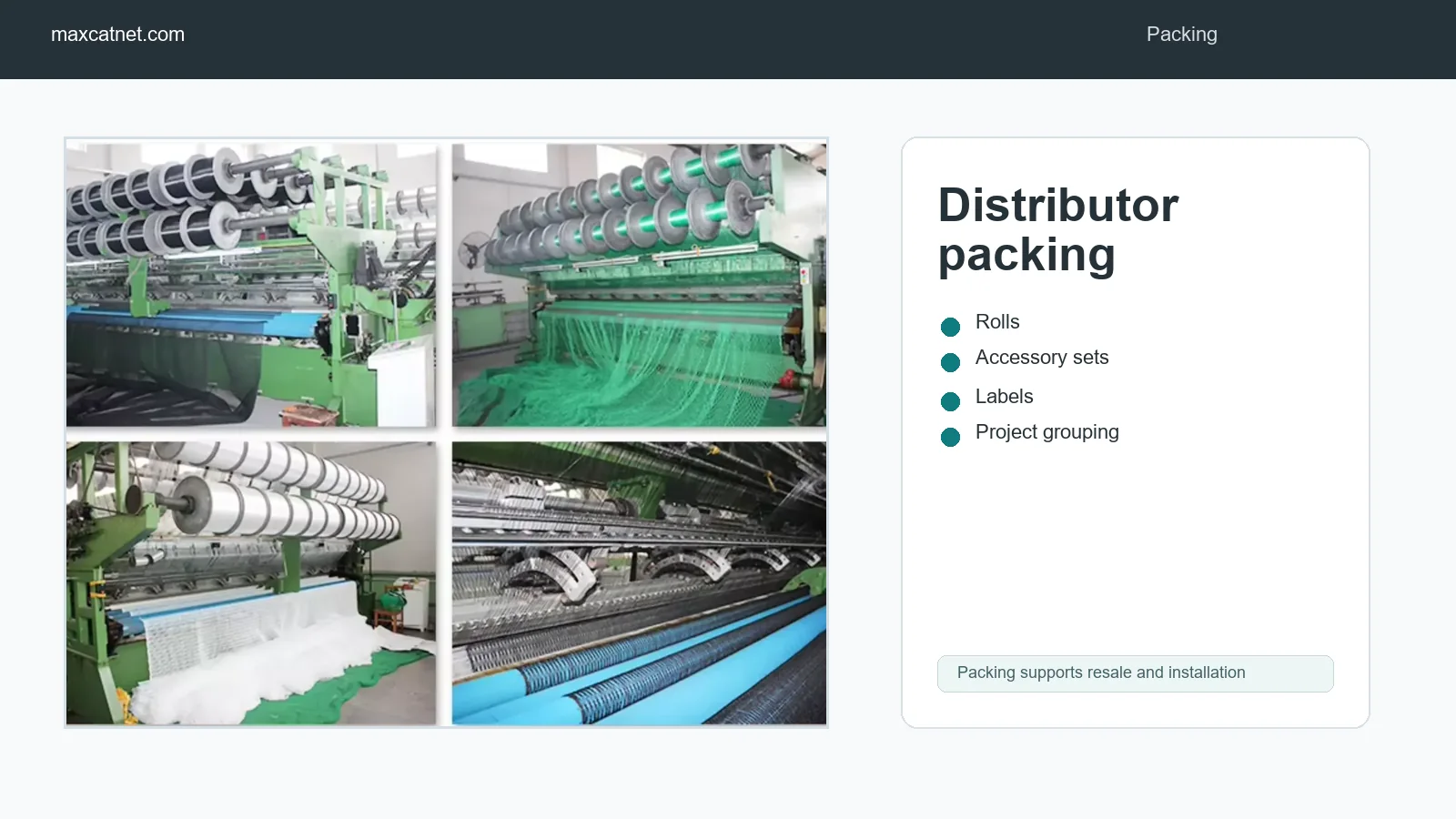
MaxCatNet supplies cat net products for B2B buyers, including transparent nylon cat protection net and wire-reinforced cat net. Distributor orders should define packing before production, not after the goods are finished.
Choose Roll or Set Packing
Roll packing can be useful for distributors who cut netting locally or stock standard sizes. Project-set packing can be useful for installers who need one net panel and accessories for each balcony or window. The right choice depends on how the buyer sells and installs the product.
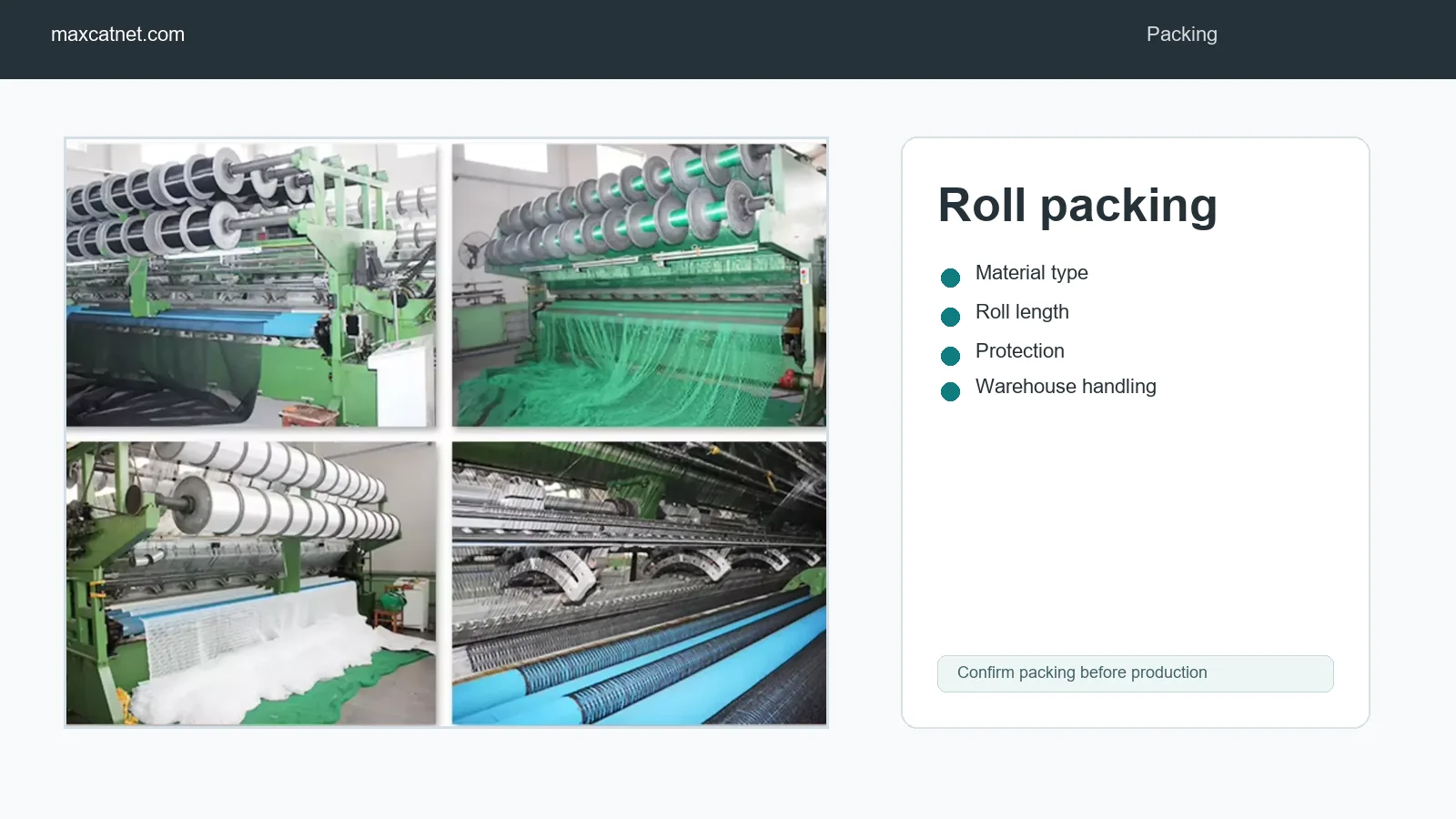
If a buyer only says "standard packing," the supplier may not know whether warehouse efficiency, retail display or installation grouping is more important.
Group Accessories Clearly
Accessories should match the installation method. No-drill clips, edge rope, hooks or other fixing items should not be treated as an afterthought. The order should state whether accessories are packed with each net, packed by carton or supplied in bulk.
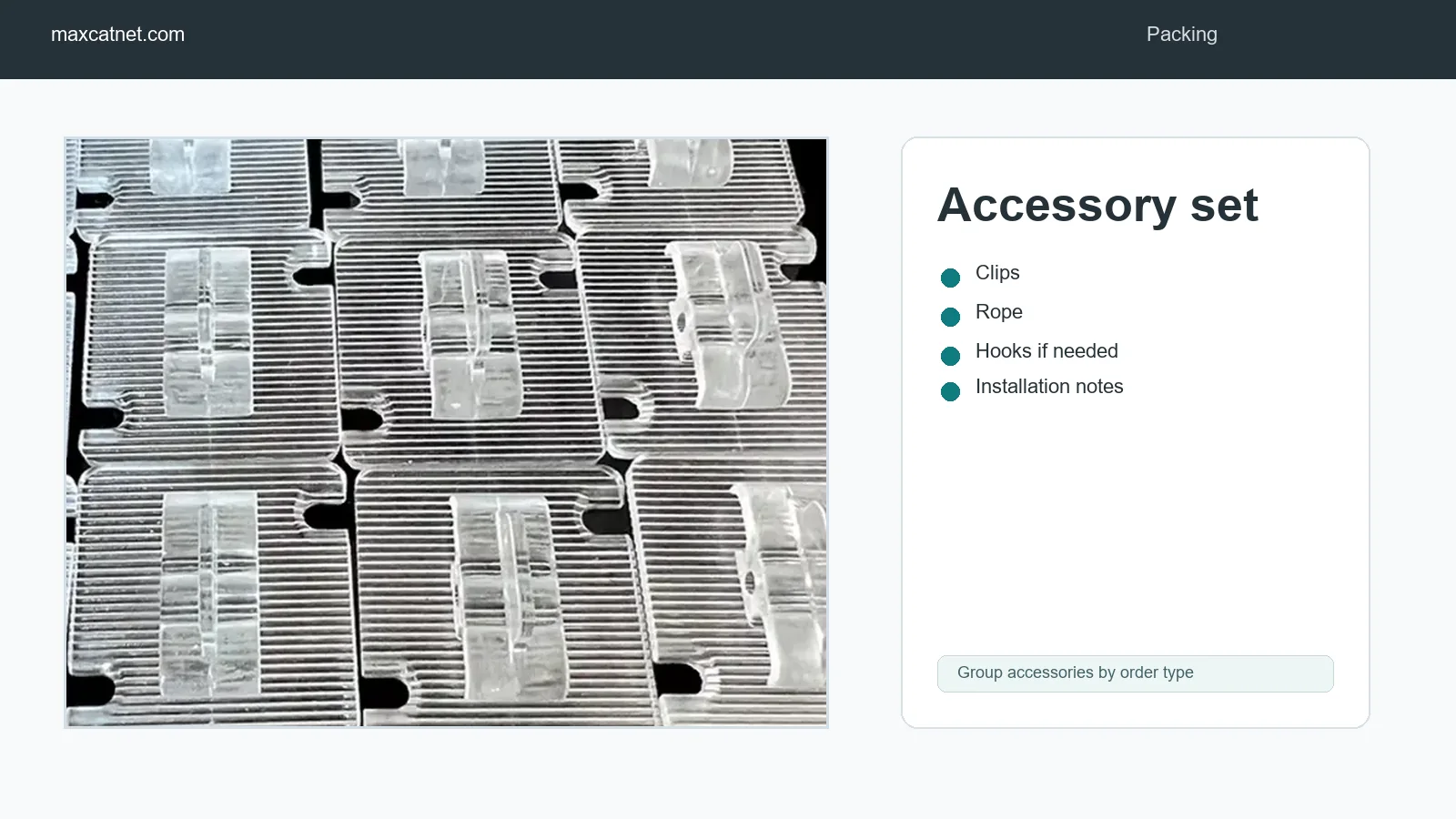
This is especially important when one shipment includes multiple projects. A missing accessory can delay installation even when the mesh itself is correct.
Label Material and Size
Transparent nylon net and wire-reinforced net should be labeled clearly. Size, material, color if relevant, accessory set and project reference should be visible enough for warehouse staff to separate orders.
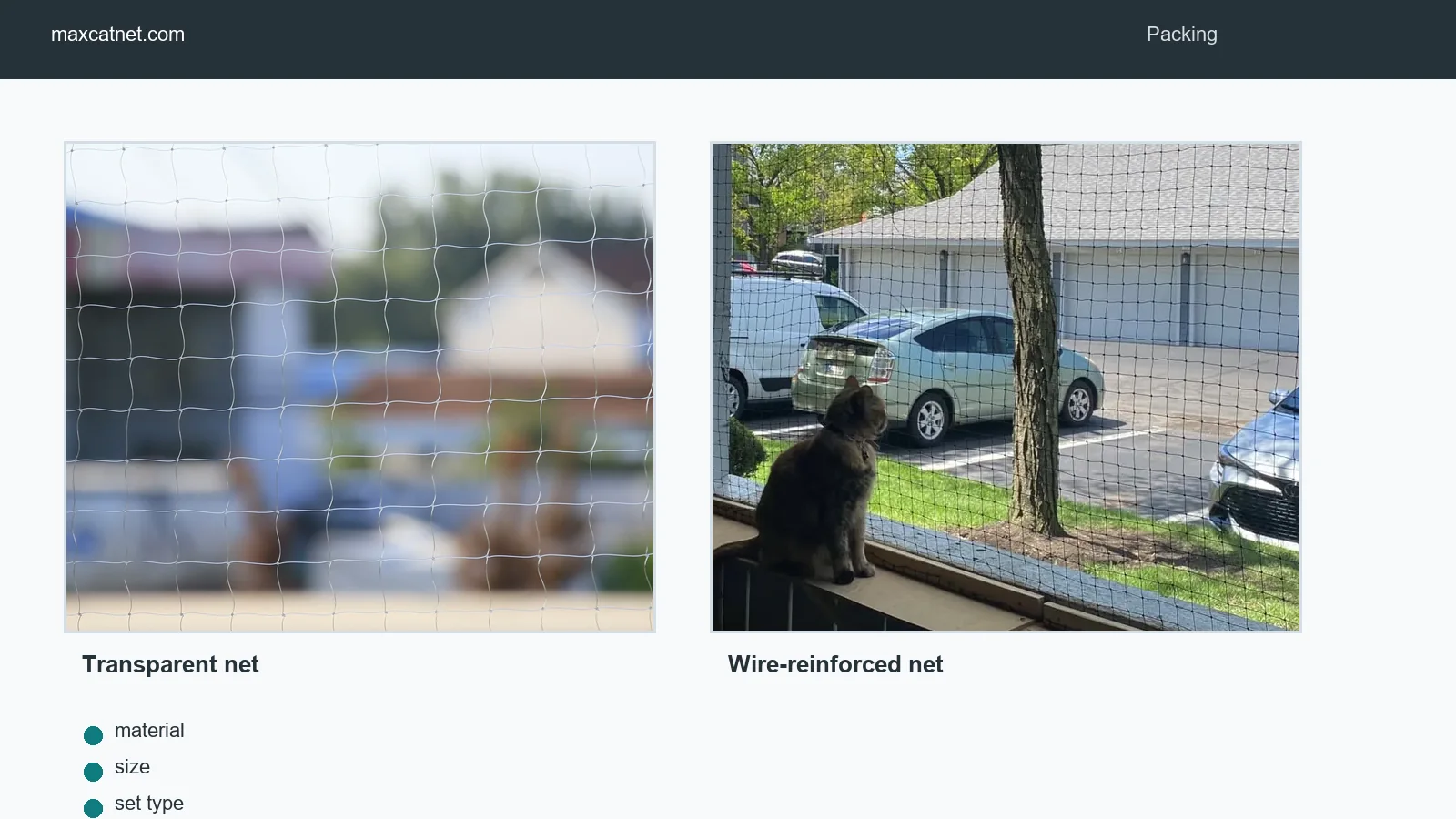
Good labels do not need to make unsupported claims. Avoid words such as "escape-proof" or "bite-proof" unless they are part of verified and approved product language. Use honest material descriptions instead.
Prepare a Packing List
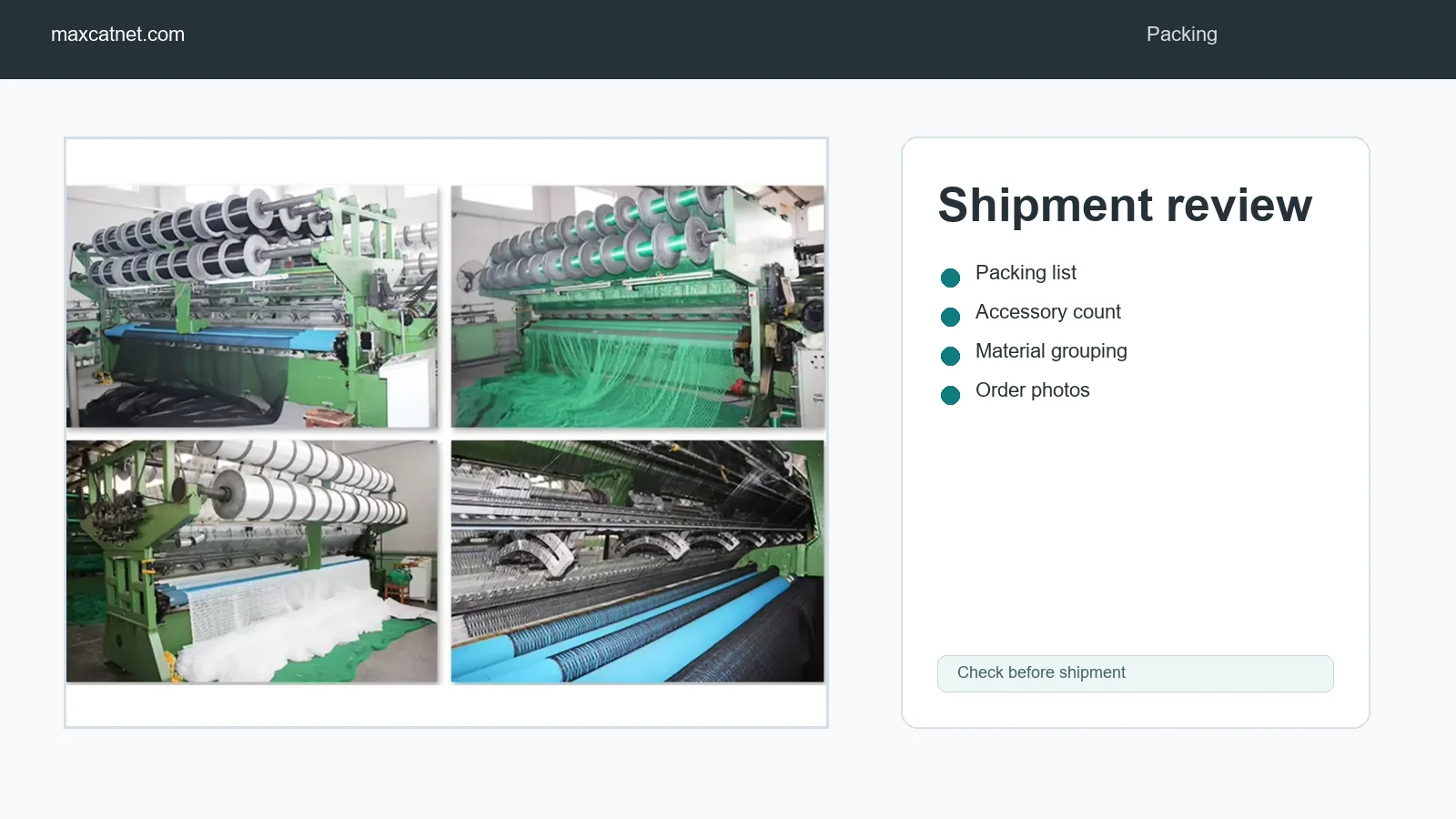
Before shipment, prepare a packing list showing carton count, net type, size, accessory set and any project labels. Buyers can request photos of the packed goods for record keeping.
How Packing Supports Repeat Orders
For repeat distributor orders, packing consistency reduces communication time. If the first order works well, keep the same packing method and improve only the details that created confusion in the warehouse or installation site.
Distributor SKU and Warehouse Planning
Distributors should decide whether cat net products will be sold as material rolls, pre-packed sizes or project kits. Each model creates a different warehouse workflow. Rolls support flexible cutting, while project kits reduce installer sorting time. Pre-packed sizes can help repeat retail or online orders when the buyer has stable demand.
| Packing Format | Best Fit |
|---|---|
| Bulk rolls | Distributors who cut net locally |
| Standard size packs | Repeated sizes for retail or ecommerce stock |
| Project sets | Installers handling balcony or window projects |
| Accessory cartons | Buyers who manage fixing items separately |
The packing decision should be made before production because it affects labels, carton planning and how accessories are counted.
Avoid Mixing Material Types in the Same Label System
Transparent nylon cat net and wire-reinforced cat net should be separated clearly in the warehouse. Similar carton sizes can cause mistakes if labels are vague. Use material names, size, accessory set and order reference instead of broad words such as "cat net only." This is especially important when one shipment includes both product versions.
Labels should stay factual. They can describe material, size, mesh style and accessory contents. They should not make unsupported promises such as absolute bite resistance or escape prevention.
Pre-Shipment Packing Review
Before shipment, the supplier and buyer can review a packing list with carton count, net type, size, accessory quantity and label method. Photos of representative cartons can help the buyer train warehouse staff before the goods arrive. This is not a replacement for receiving inspection, but it reduces confusion at the first order.
For repeat orders, keep the same SKU names and packing structure unless there is a clear reason to change. Consistency is often more valuable to distributors than a new packing idea every order.
Receiving Checks After Arrival
When the shipment arrives, distributors should compare the packing list with actual cartons before goods enter stock. Check material type, size, accessory quantity and label wording. If the order includes both transparent nylon net and wire-reinforced net, separate the cartons by material before warehouse staff starts picking orders.
For first-time orders, keep photos of the carton label, inner packing and accessory set. These photos become a practical reference for repeat orders and help the buyer decide whether the next shipment should use the same packing method.
Accessory Reorder Planning
Accessories may be consumed at a different speed from net rolls. Clips, rope or fixing items can run short if distributors only reorder mesh. Keep a simple accessory usage record by project type so the next RFQ includes realistic accessory quantities.
This also helps purchasing teams separate normal replenishment from project-specific accessory demand.
FAQ
Is roll packing better than individual set packing?
It depends on the buyer's business model. Roll packing suits stock and cutting, while set packing suits project installation.
Should accessories be included in the same carton?
For project sets, yes. For distributor stock, bulk accessory packing may be easier. The buyer should decide before production.
What should labels include?
Labels should include material, size, quantity, accessory set and project reference where needed.
Send Packing Requirements Early
When requesting a cat net quotation, include material, size, accessory needs, packing method and label requirements. Send the information through the MaxCatNet contact page so packing can support your distribution workflow.